
Regional Hub
Southeast Brazil
The Atlantic Forest from the coast to nearly 2,800 metres (9,200 feet): cotingas calling in the mist, hummingbird feeders at arm's length, and some of the best birding on Earth.
Rio de JaneiroSão PauloEspírito SantoMinas Gerais
Lowland Atlantic ForestMontane Atlantic ForestCampos de altitudeCampo rupestre
Birding Southeast Brazil
Southeast Brazil holds the richest and most accessible Atlantic Forest birding in the country, climbing from the coast to peaks near 2,800 metres (about 9,200 feet).
From the forests of Rio de Janeiro and São Paulo to the mountains of Espírito Santo and Minas Gerais, this is one of the planet's great endemism hotspots, set in a region that is also home to Brazil's largest cities and colonial towns.
The birding follows an altitudinal gradient: lowland reserves, montane cloud forest, hummingbird feeders, and the campo rupestre of the highlands. Signature birds include the cotingas of the Serra dos Órgãos, the Itatiaia Spinetail in Brazil's first national park, and rarities clinging on like the Cherry-throated Tanager, Critically Endangered and down to fewer than 30 known individuals, the Endangered Red-billed Curassow and many more.
Our current Southeast departures are listed further down this page, and we also build private itineraries around your targets Tailored Travel. For the stories behind one of the region's rarest birds, read What's the Deal with the Cherry-throated Tanager?, The Mystery of the Rio de Janeiro Antwren and our profile of Sítio Cotinga, a high-altitude refuge in the heart of the Serra do Mar and the beautiful story behind Macuquinho Lodge.
Quick Reference
The classic Atlantic Forest experience, taking you up stunning altitudinal gradients to target some of the rarest, most endangered cotingas, hummingbirds, and waterfowl on Earth.
At a Glance
Signature Birds
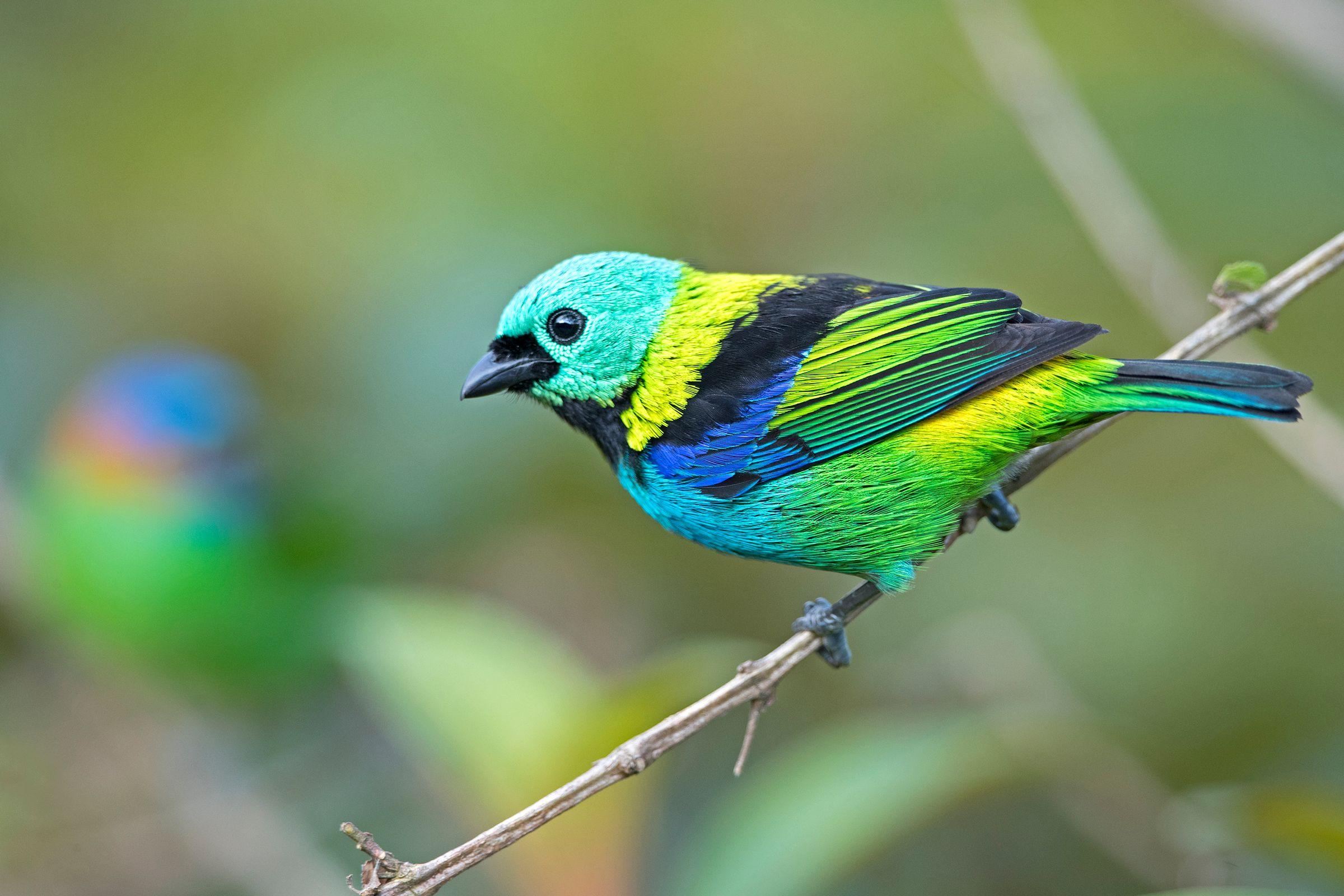
Cherry-throated Tanager, Critically Endangered with fewer than 30 known individuals; Red-billed Curassow; Brazilian Merganser; Grey-winged and Black-and-gold Cotingas in the mist of the Serra dos Órgãos; Itatiaia Spinetail; Bare-throated Bellbird; and hummingbirds by the dozen at the feeders.
Habitats
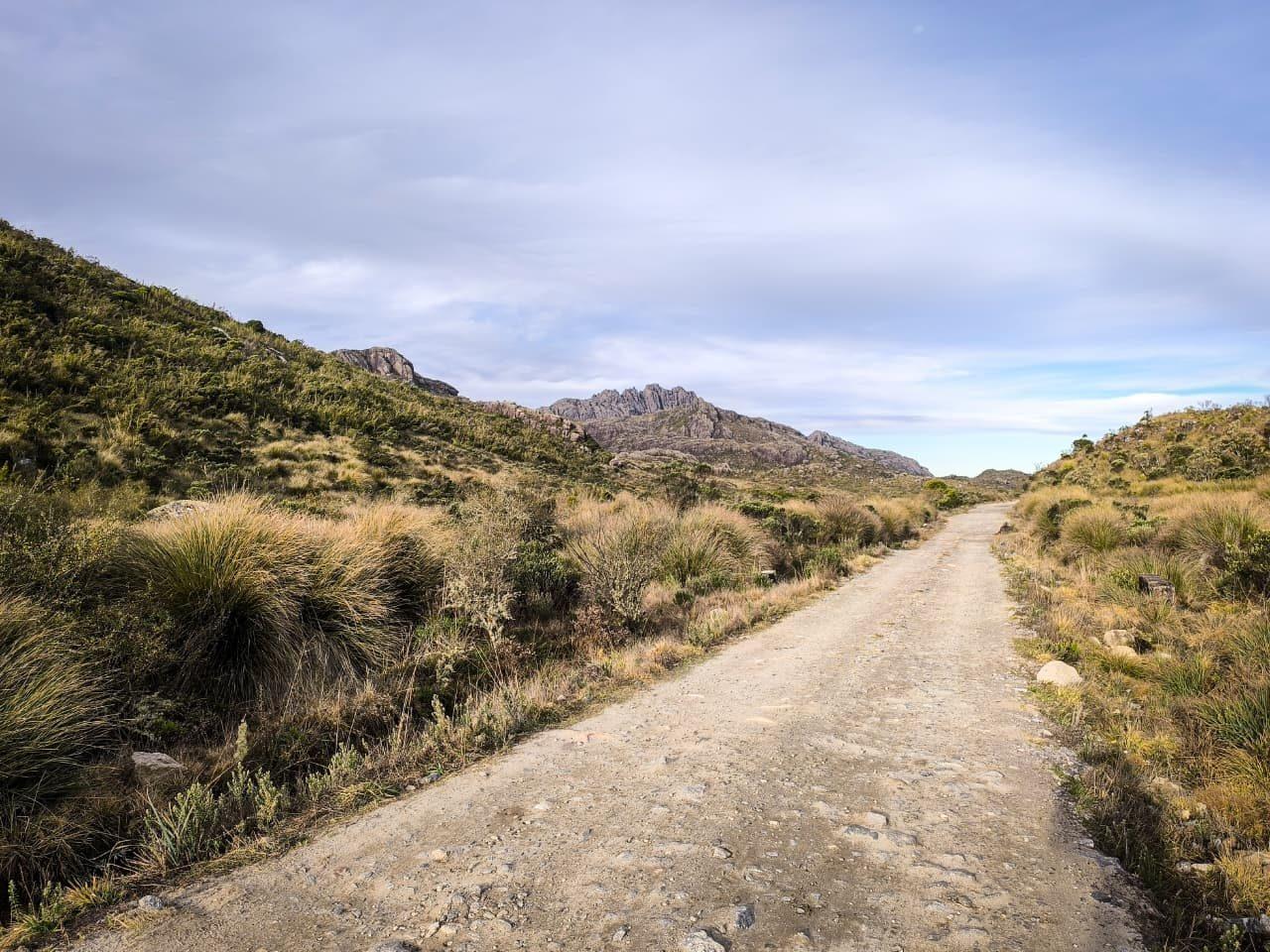
The Atlantic Forest across its whole altitudinal gradient: lowland tabuleiro forest at Linhares, montane cloud forest in the Serra do Mar and the Serra dos Órgãos, the campos de altitude of Itatiaia and Caparaó near 2,800 m (9,200 ft), the campo rupestre of Serra do Cipó and the Cerrado grasslands of Serra da Canastra just to mention a few.
Pace and Terrain
Rated 2/5 (Easy-Moderate) on both set departures. Light walking of 2 to 4 km (1 to 2.5 miles) a day, much of it from roads, boats and feeders. The two real efforts are the uphill walk at Pico da Caledônia for the cotingas and a steep hike in the campo rupestre of Serra do Cipó. Warm in the lowlands, cold in the mountains. Groups of eight at most.
Beyond the Birds
Colonial Paraty, the coffee farms of Minas Gerais, the Caraça sanctuary, where Maned Wolves come to the steps at night, and lodges that have turned hummingbird feeders into an art form.
Highlights
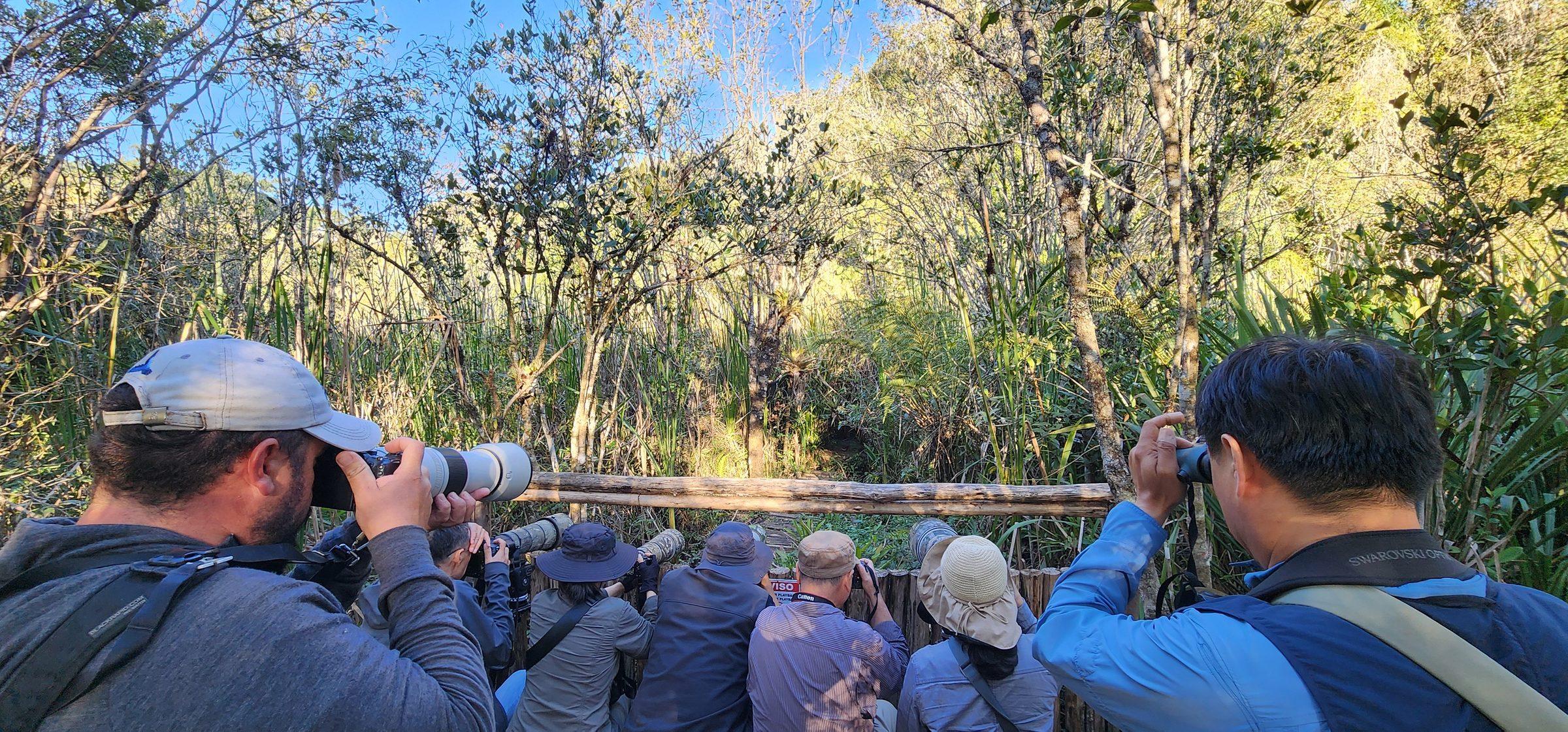
Feeders and Hides
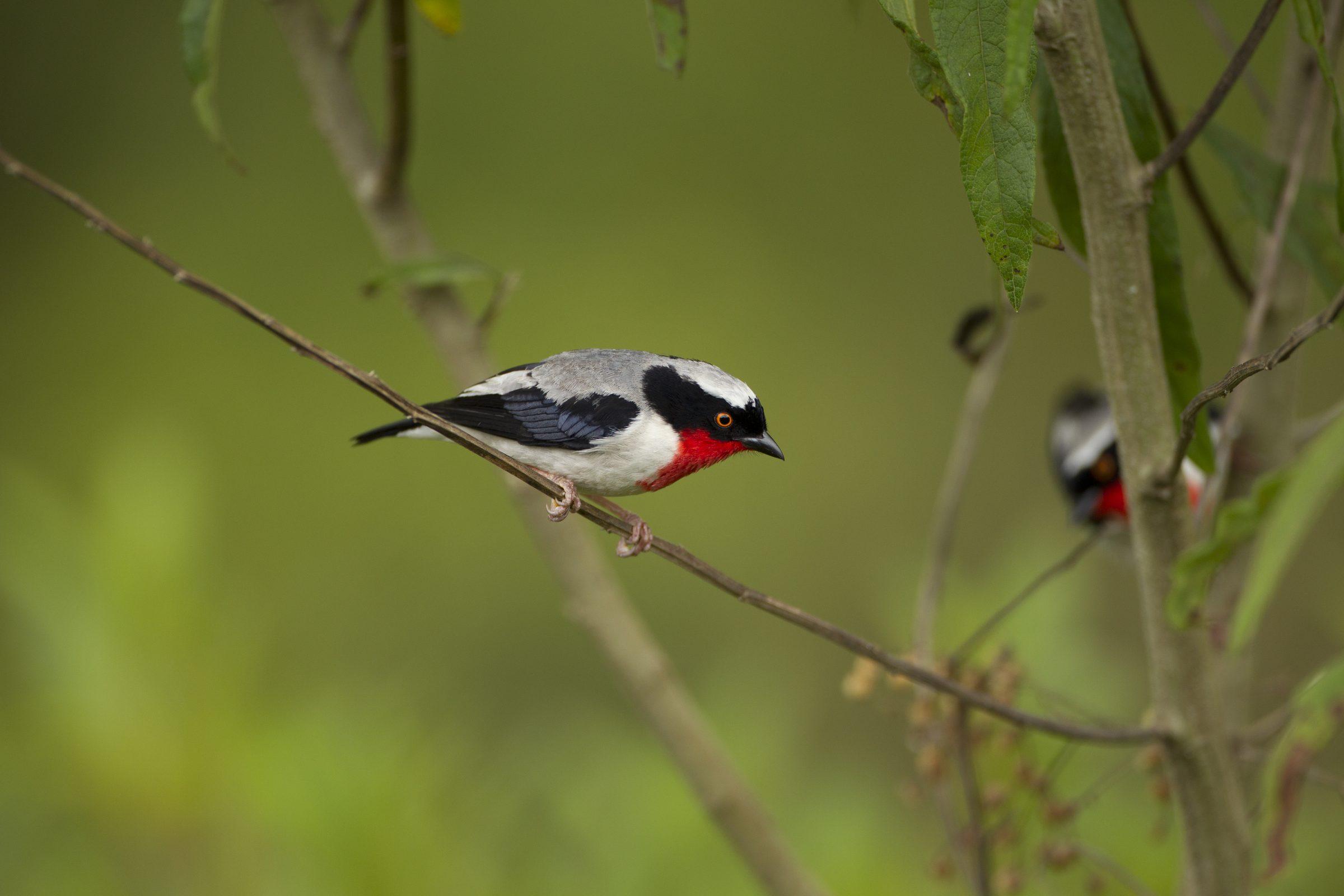
Cherry-throated Tanager
Best Time to Visit Southeast Brazil
The Atlantic Forest of the Southeast keeps the classic calendar: warm, wet summers from October to March and a dry, cool winter from about May to September. Spring and early summer are the season of song. From August to January the cotingas are calling, the Bare-throated Bellbird hammers its note from the highest branches, and the skulkers (antbirds, tapaculos and bristlefronts) are on territory and findable by ear. That is the prime window. The dry season, from April to July, is quieter on the trails but very good in its own way: crisp mornings, clean light, and the hummingbird feeders of Santa Teresa, Ubatuba and Itatiaia running at full capacity, which is why photographers love it. February and March are good, with the song fading and the rains at their heaviest. No month here is fair.
Jan
Feb
Mar
Apr
May
Jun
Jul
Aug
Sep
Oct
Nov
Dec
Prime
Good
Good
Very Good
Very Good
Very Good
Very Good
Prime
Prime
Prime
Prime
Prime
Prime
Very Good
Good
Off-Season

Our Tours in Southeast Brazil
Our set departures in Southeast Brazil. For private dates and custom routes, see Tailored Travel.

Southeast · South
Southeast/South Supreme Tour
Nov 17 to Dec 14, 2027
Welcome to the Southeast/South Brazil Supreme Tour!
View more
LAST Spot
Southeast
Southeast Popular Tour - September
Sep 21 to Oct 7, 2027
The Atlantic Forest at its best, from the heights of Itatiaia and the song of the Black-and-gold Cotinga to the endemic-rich trails of Intervales
View more
Popular
Southeast
Southeast Popular Tour - October
Oct 20 to Nov 5, 2027
The Atlantic Forest at its best, from the heights of Itatiaia and the song of the Black-and-gold Cotinga to the endemic-rich trails of Intervales
View more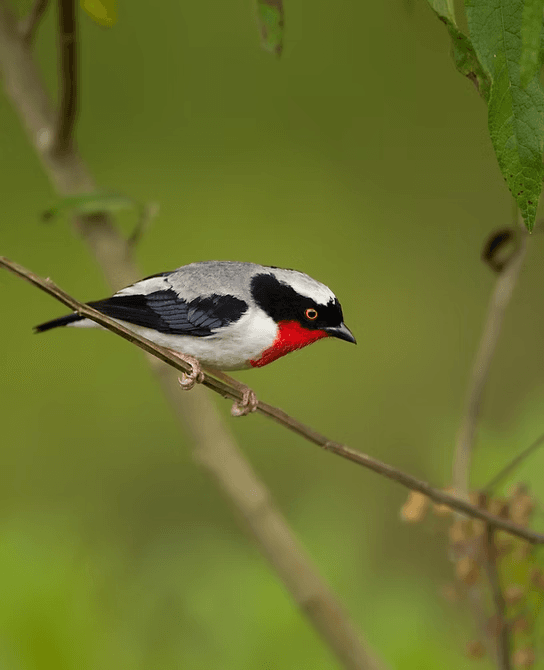
Customize your experience
Ready to Explore Southeast Brazil?
Tell us your targets, your dates and the pace you like, and we will build the route around them. Ornithologist guides, and groups of eight at most.