Day
0
0
Fortaleza
Arrivals at Fortaleza Airport.

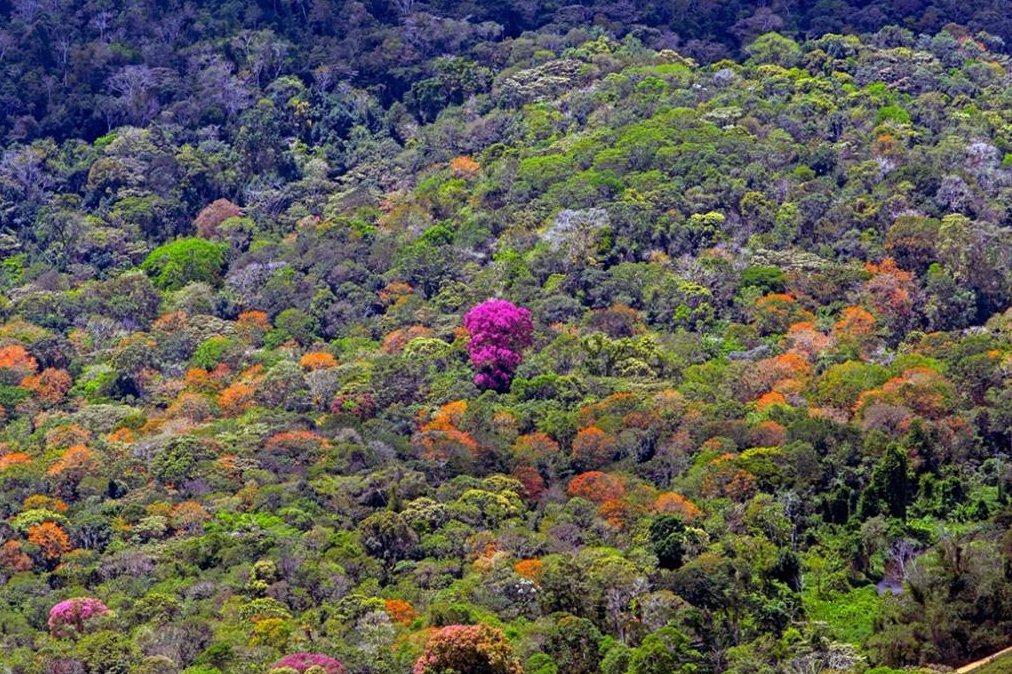
A special bird every day, lots of endemics and some of the rarest birds in the world
Duration
Region
4 states
Brazil
About this itinerary
A mind-blowing tour: a special bird every day, lots of endemics and some of the rarest birds in the world. We travel approximately 6,000 km in 23 days, crossing the Northeast and visiting Central Brazil and part of the Southeast (the north of Minas Gerais, almost Bahia).
We go from the endangered Grey-breasted Parakeet in Guaramiranga, cross the incredible Cerrado of Central Brazil to see Pfrimer’s Parakeet, visit the north of Minas Gerais for the rare Blue-eyed Ground-Dove, and finish with nothing less than the magnificent Banded Cotinga in southern Bahia. The list of possible endemics is long; to keep it simple, the headline birds are Araripe Manakin (Chapada do Araripe), Lear’s Macaw (Canudos), Pfrimer’s Parakeet (São Domingos) and Blue-eyed Ground-Dove (Botumirim).
The route
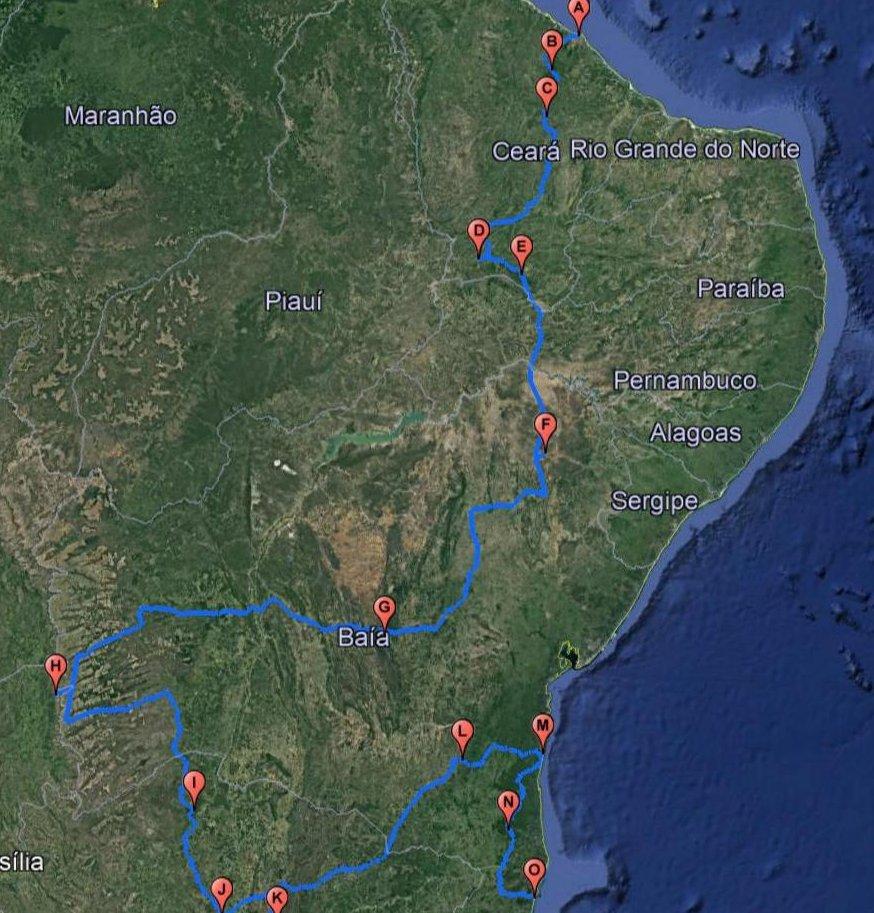
Fortaleza (A), Guaramiranga (B), Quixadá (C), Potengi (D), Barbalha (E), Canudos (F), Lençóis (G), São Domingos (H), Peruaçu National Park (I), Montes Claros (J), Botumirim (K), Boa Nova (L), Itacaré (M), Camacan (N), Porto Seguro (O).
| Day | Route | Plan |
|---|---|---|
| 0 | Fortaleza | Arrivals |
| 1 | Fortaleza – Guaramiranga (120km) | Early transfer. AM and PM Birding |
| 2 | Guaramiranga – Quixadá (110km) | AM Birding. Transfer. PM Birding |
| 3 | Quixadá – Potengi (350km) | AM Birding. Transfer. PM Birding |
| 4 | Potengi – Barbalha (105km) – Canudos (350km) | AM Birding. Transfer. PM Birding |
| 5 | Canudos – Chapada Diamantina (560km) | AM Birding. Transfer. PM Birding |
| 6 | Chapada Diamantina (Lençóis) | AM and PM Birding |
| 7 | Chapada Diamantina (Lençóis) | AM and PM Birding |
| 8 | Lençóis – São Domingos (715km) | Transfer. PM Birding |
| 9 | São Domingos | AM and PM Birding |
| 10 | São Domingos – Peruaçu National Park (600km) | Transfer. PM Birding |
| 11 | Peruaçu National Park | AM and PM Birding |
| 12 | Peruaçu National Park – Montes Claros (220km) | AM Birding. Transfer. PM Birding |
| 13 | Montes Claros – Botumirim (180km) | AM Birding. Transfer. PM Birding |
| 14 | Botumirim | AM and PM Birding |
| 15 | Botumirim – Boa Nova (570km) | AM Birding. Transfer. PM Birding |
| 16 | Boa Nova | AM and PM Birding |
| 17 | Boa Nova (Poções) | AM and PM Birding |
| 18 | Boa Nova – Itacaré (200km) | Transfer. PM Birding |
| 19 | Itacaré – Camacan (Serra Bonita) (200km) | AM Birding. Transfer. PM Birding |
| 20 | Serra Bonita Reserve | AM and PM Birding |
| 21 | Serra Bonita Reserve – Porto Seguro (200km) | AM Birding. Transfer. PM Birding |
| 22 | Porto Seguro | AM and PM Birding |
| 23 | Porto Seguro | Departures |
Day by day
Arrivals at Fortaleza Airport.
Transfer to Guaramiranga (+/-2hrs [120Km]) and birding the rest of the day.
Read more · 2 photos
Located 100km from Fortaleza, Maciço de Baturité has a remarkable humid Forest ranging from 600-1100 meters of altitude. This Forest is a kind of island in the middle of the Caatinga (dry) vegetation, that is predominant in the lower elevations (below 600 meters). Because of its unique habitat, this is the main refuge for several humid forest species in the state of Ceará. We will be birding nearby town in private properties with good trails and/or roads.
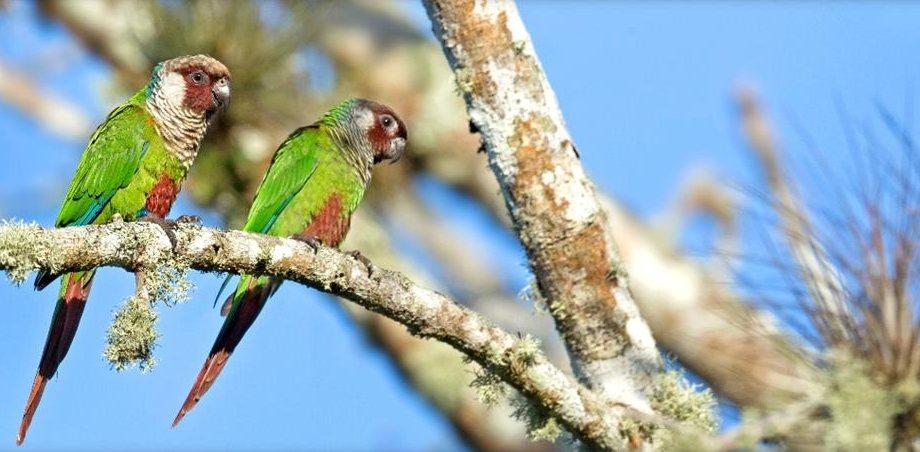
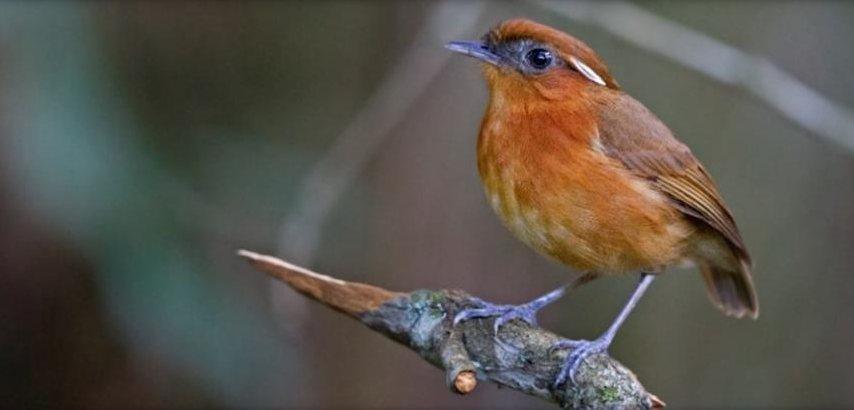
One of the highlights here is the Grey-breasted Parakeet (Pyrrhura griseipectus), one of the world's most threatened parrots. Other species of great interest are Buff-breasted Tody-Tyrant (Hemitriccus mirandae), Ceara Gnateater (Conopophaga cearae), Ceara Woodcreeper (Xiphorhynchus atlanticus), Ochraceous Piculet (Picumnus limae), Guianan Tyrannulet (Zimmerius acer), Band-tailed Manakin (Pipra fasciicauda), Gould’s Toucanet (Selenidera gouldii), Grey-headed Spinetail (Cranioleuca semicinerea), among others. We will also pay special attention to some subspecies that could possibly be elevated to species in the future such as Variable Antshrike (Thamnophilus caerulescens cearensis), Red-necked Tanager (Tangara cyanocephala cearensis) and Rufous-breasted [Ceara] Leaftosser (Sclerurus scansor cearensis).
AM Birding in Guaramiranga and transfer to Quixadá (+/-2hrs [110Km]). PM Birding.
Read more · 3 photos
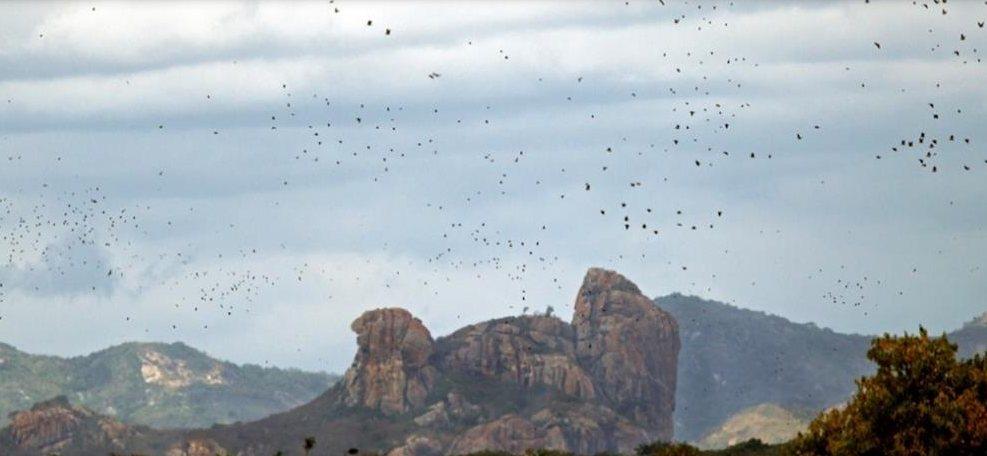
Quixadá is a municipality in the state of Ceará located three hours from the capital. One of its most striking features are the rock formations, the monoliths, in various formats that "break" the apparent monotony of the countryside landscape. The hotel we stay is away from town and birding will be around the hotel grounds.
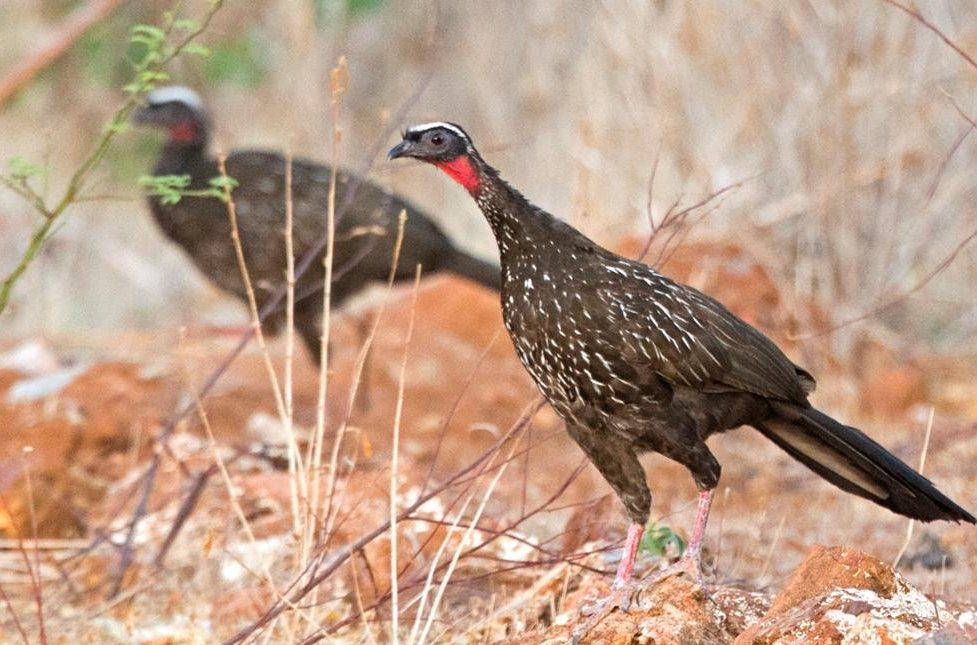
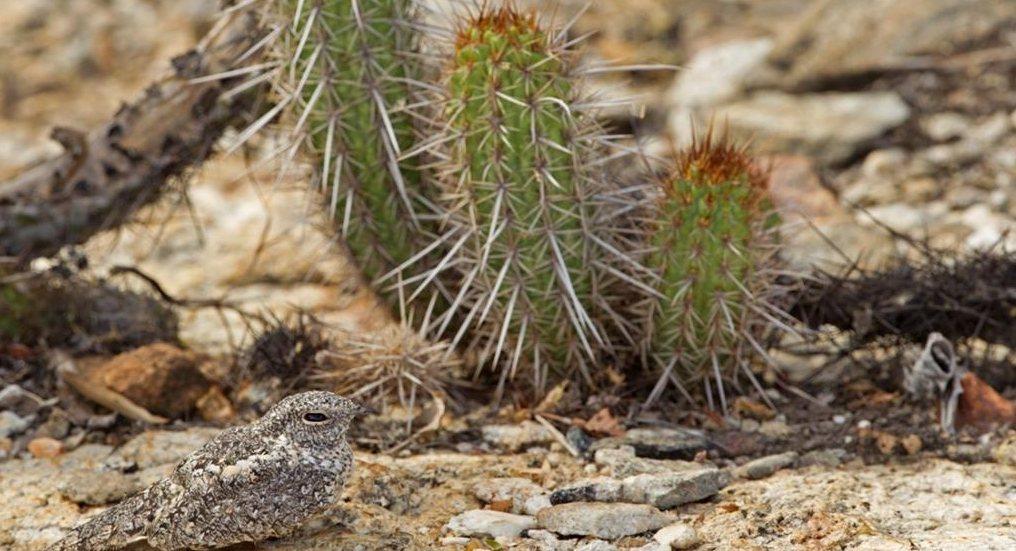
Here we start to explore Caatinga habitat. A few birds worth highlighting are: White-naped Jay (Cyanocorax cyanopogon), Caatinga Parakeet (Eupsittula cactorum), Pygmy Nightjar (Nyctipolus hirundinaceus), Black-bellied Antwren (Formicivora melanogaster), Pale Baywing (Agelaioides fringillarius), the Caatinga race of Long-billed Wren (Cantorchilus longirostris bahiae), Caatinga Cacholote (Pseudoseisura cristata), Ochre-backed Woodpecker (Celeus ochraceus) and, if we are lucky, we might even see the rare and endemic Whitebrowed Guan (Penelope jacucaca). During the dry season, a flock usually comes to drink in a reservoir in the hotel area.
AM Birding before breakfast and transfer to Potengi (+/-5hrs [350Km]). Lunch and PM Birding in the Sítio Pau Preto area.
Read more · 4 photos
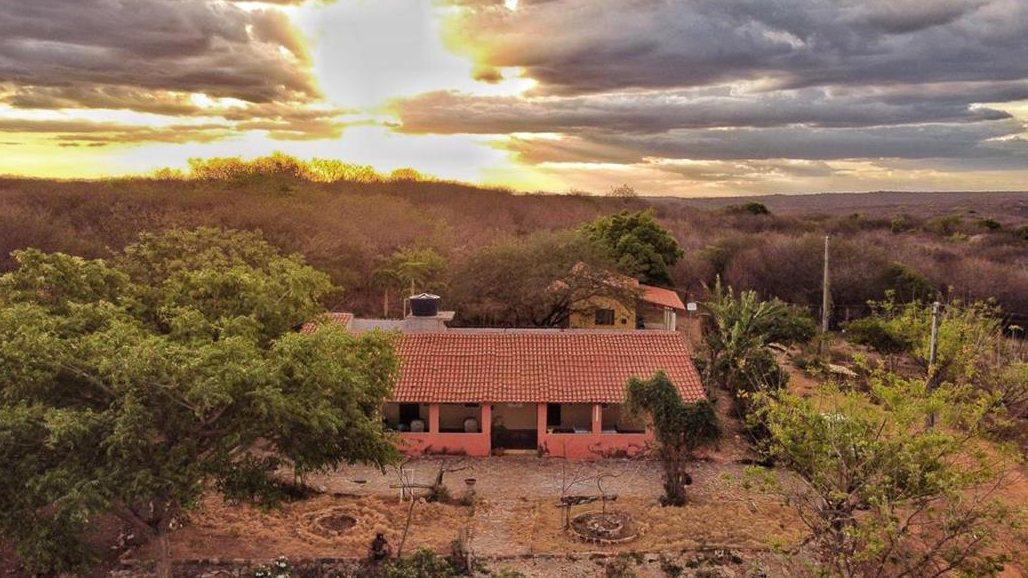
Potengi is a small town in the south region of Ceará, part of the Chapada do Araripe area. Only recently has Potengi entered the world birding scenario because of a passionate birdwatcher and biologist that transformed his family property in a refuge for Caatinga birds, the “Sítio Pau Preto”. We will stay in a family-owned small lodge where we can feel right at home hosted by him and his kind family. We will bird around to search for some of the most special birds of this unique habitat. For those who enjoy taking photos, there are also feeders.
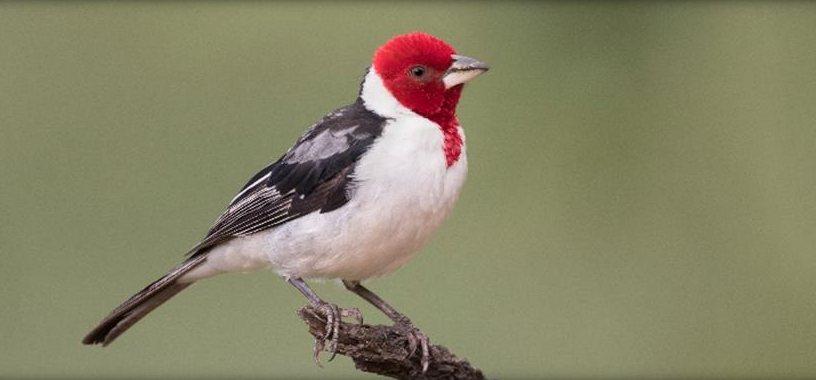
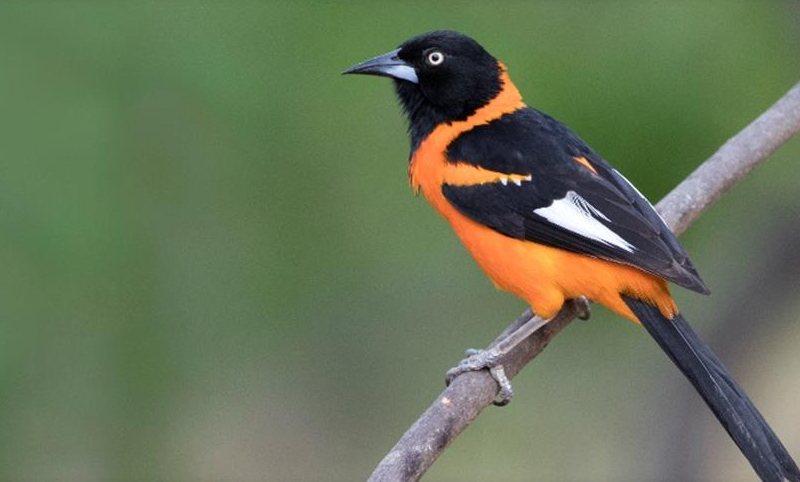
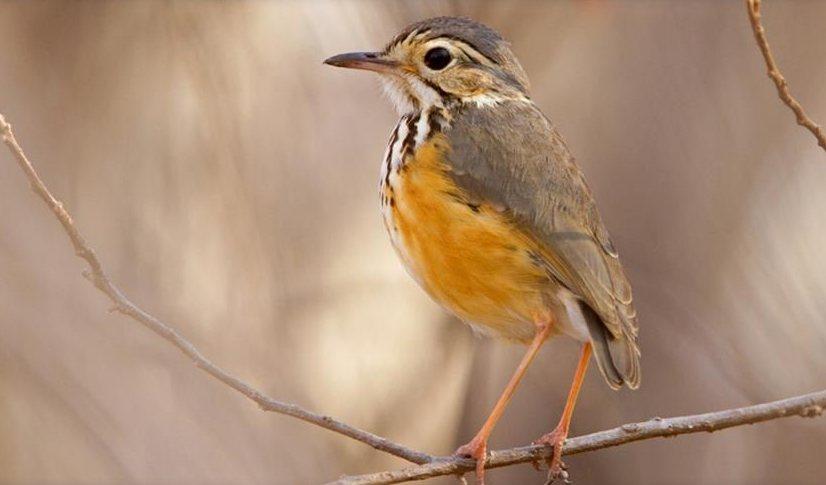
Here we keep searching for Caatinga specialties, such as White-browed Antpitta (Hylopezus ochroleucos), Caatinga Antwren (Radinopsyche sellowi), White-throated Seedeater (Sporophila albogularis), Scarlet-throated Tanager (Compsothraupis loricata), Great Xenops (Megaxenops parnaguae), Red-shouldered Spinetail (Synallaxis hellmayri), the local races of Lesser [Bahia] Wagtail-Tyrant (Stigmatura napensis bahiae), Greater [Caatinga] Wagtail-Tyrant (Stigmatura budytoides gracilis) and Stripe-backed Antbird (Myrmorchilus strigilatus strigilatus). Do not forget the feeders, where we could see Campo Troupial (Icterus jamacaii), Red-cowled Cardinal (Paroaria dominicana), White-naped Jay (Cyanocorax cyanopogon), Grey Pileated Finch (Coryphospingus pileatus) and more. In the end of the day, we have chances of seeing Least Nighthawks (Chordeiles pusillus) flying over the lodge.
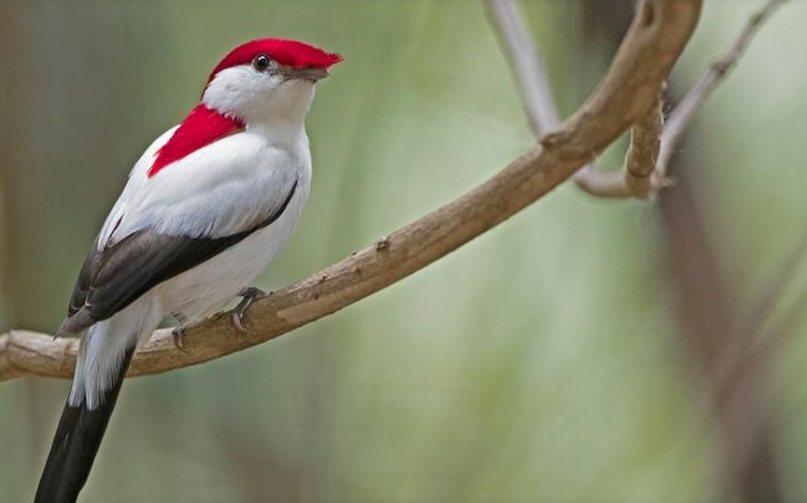
After birding in Potengi early in the morning, we will head to the foothills of the Chapada do Araripe plateau (Barbalha) (+/-1½hrs [80 km]), a place you cannot miss out on! It is the Only area in the World for the superb Araripe Manakin (Antilophia bokermanni). Chapada do Araripe rises in the middle of the dry lowlands, forming a natural boundary between the states of Pernambuco, Piauí and Ceará. The northeastern portion of the Chapada, faces the state of Ceará and concentrates hundreds of springs, forming a true oasis in the Caatinga. The Araripe Manakin was described to science only in 1998 and to this day it stands out as one of the greatest “recent” discoveries in Ornithology. The species has an estimated distribution of 30km²; exclusive to the humid forests along the Ceará side of the Chapada slope; it is therefore classified as Critically Endangered. It is the target of conservation projects led by the Ceará NGO Aquasis, which, in partnership with government agencies, national and international NGOs, has been working to prevent the extinction of this beautiful bird.
Read more · 4 photos
Situated in the northern portion of the state of Bahia, near the borders with Pernambuco, Sergipe and Alagoas, Canudos has some of the most extraordinary scenarios of this trip: the experience of hearing the macaws calling and seeing the red sand cliffs contrasting with the indigo blue of the macaws is simply unforgettable.
One of the most exciting moments of the trip, the encounter with the Lear’s Macaw (Anodorhynchus leari)! This amazing species only occurs in this region, the northern portion of Bahia. Besides our main target, we’ll name a few other species that we could keep an eye out for: the endemic race of Blue-crowned Parakeet (Thectocercus acuticaudatus haemorrhous), King Vulture (Sarcoramphus papa), Black-chested Buzzard-Eagle (Geranoaetus melanoleucus), and more.
After enjoying the Araripe Manakin, we will transfer to Canudos, in the state of Bahia, stopping for lunch on route (+/-6½hrs [470 km]). If we get there on time, we could try to see the Blue-winged Macaws (Primolius maracana) coming to their roosting site or we could explore the Caatinga areas near town, searching for any birds we might have missed on the previous days.
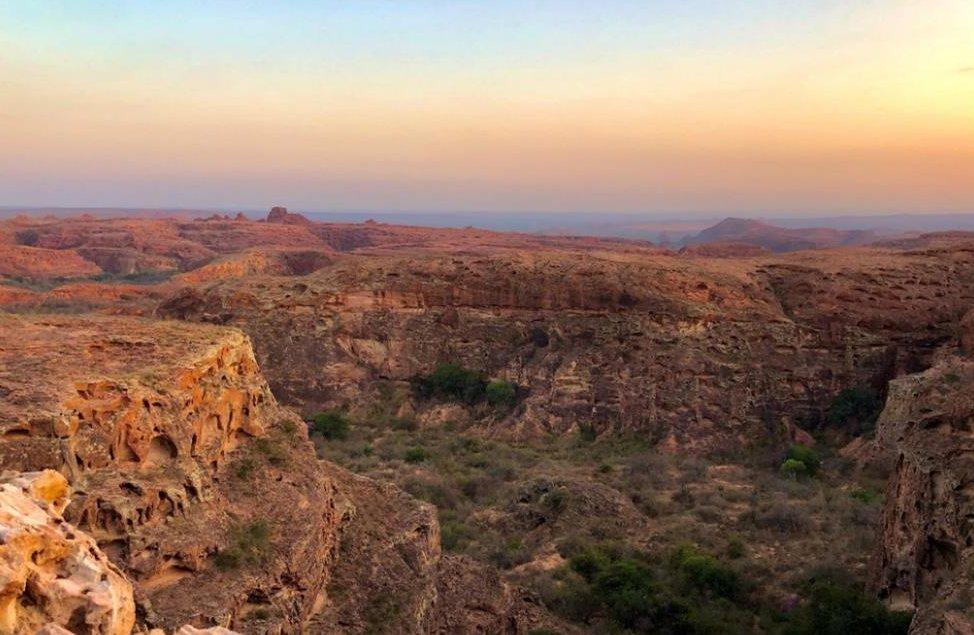
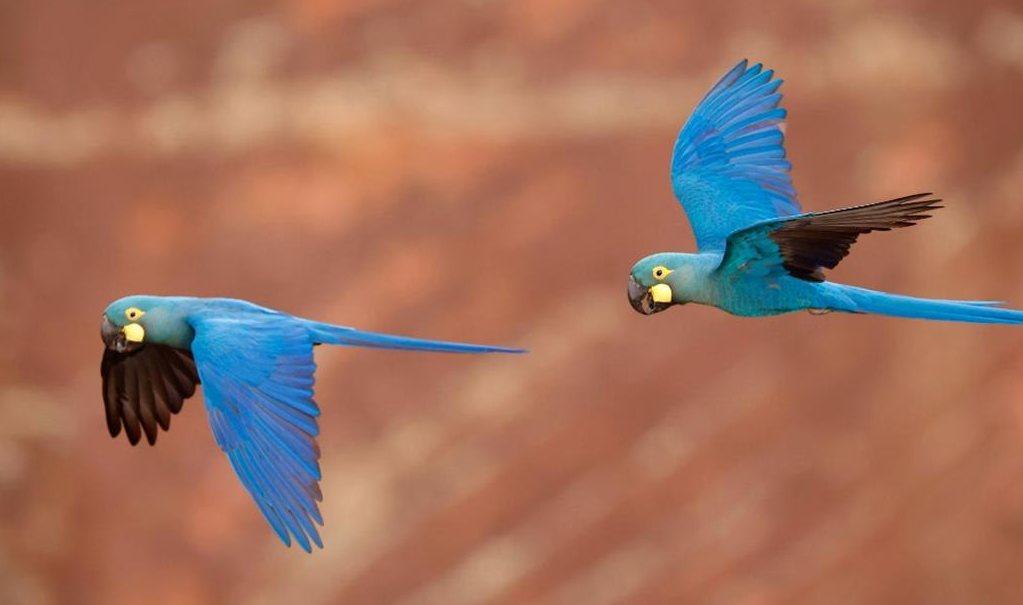
We leave the hotel while it’s still dark so that we can arrive at the macaw’s roosting site by daybreak. After enjoying the “Lear’s Macaw experience”, we go back to our accommodations for breakfast before our transfer to Chapada Diamantina (+/-8hrs [560Km]), where we will stay in the cozy town of Lençóis.
Read more · 5 photos
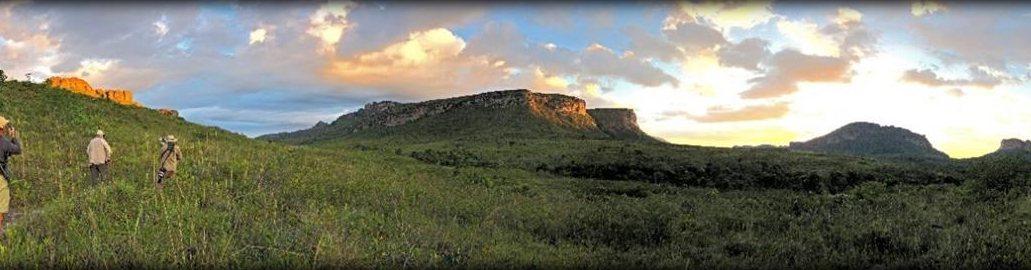
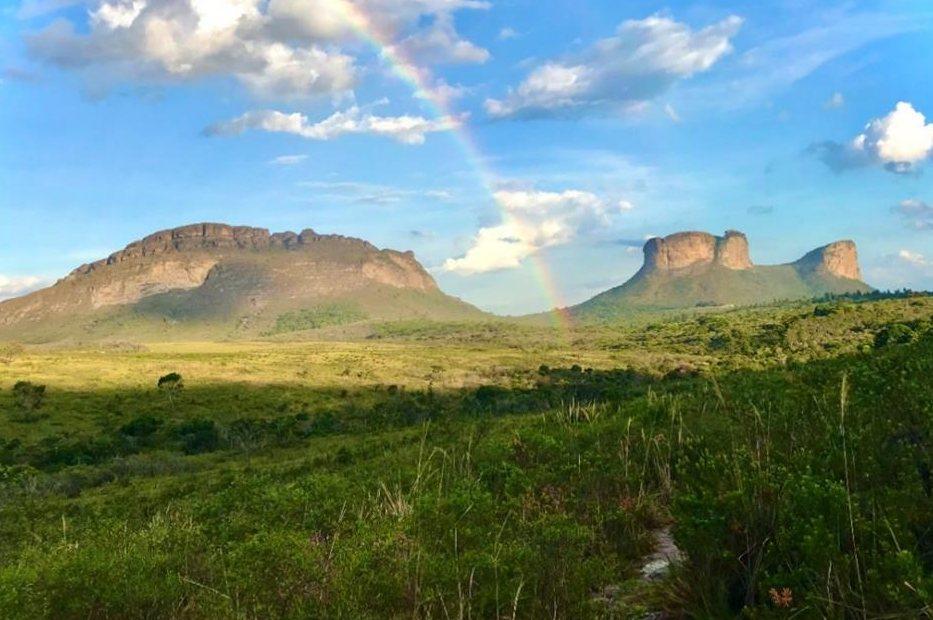
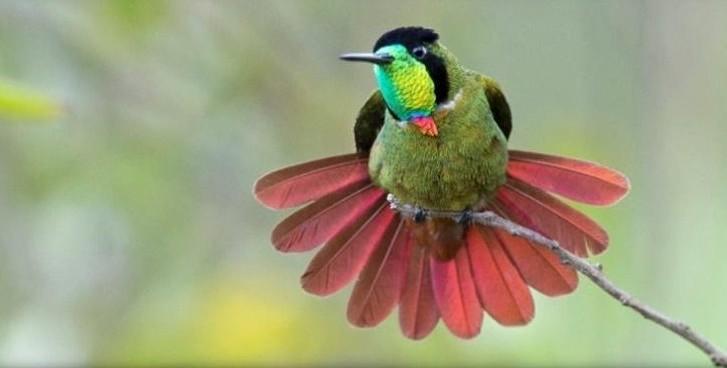
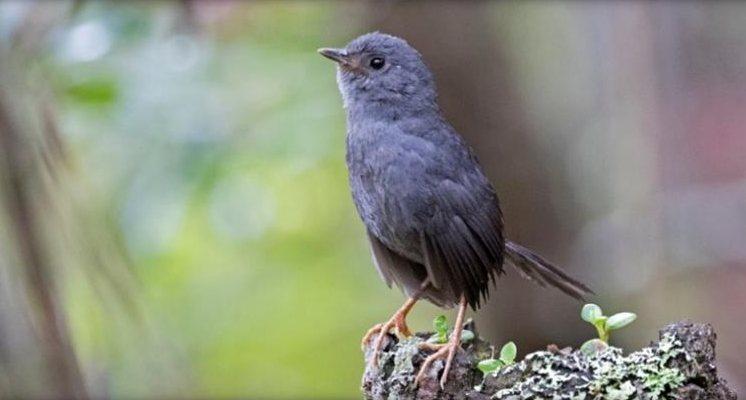
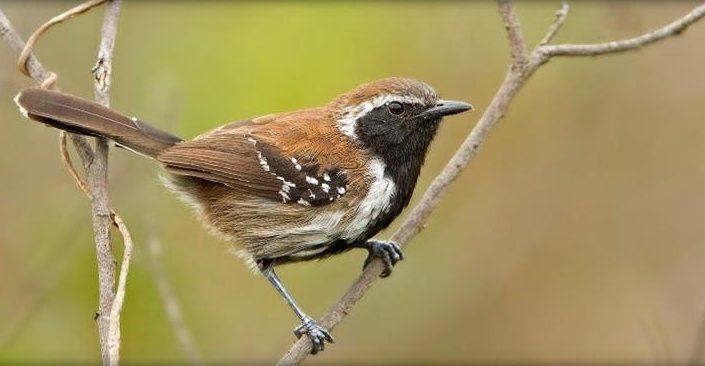
On our first day in the area, we will concentrate our efforts in the locations closer to Lençóis. AM Birding in a Campo Rupestre trail about half an hour from the hotel and PM Birding in a Humid Forest (Cerradão with Atlantic Forest influence) in the surroundings of town. On our second day, we will be doing a much longer drive in order to reach different habitats and cover all possible targets. In total, we will be driving approximately 250km on this day.
Read more
Certainly, one of the most impressing places in Brazil, the landscapes are astonishing. Chapada Diamantina is part of a long series of highlands linked to the Espinhaço mountain range, which extend from north of Minas Gerais through Bahia. There is a high diversity of habitats such as Caatinga, Cerrado, Campo Rupestre (arid mountain shrubs), Humid and Gallery Forests and a high diversity of birds (almost 400 species). Most of these beautiful landscapes and pristine habitat are part of the Chapada Diamatina National Park which protects, by law, 152.000 hectares. Because of the scenic views, preserved habitat, and waterfalls, this is one of the most visited places in the state of Bahia by tourists willing to connect with nature.
Our main targets in the Chapada Diamantina are the Hooded Visorbearer (Augastes lumachella), Sincora Antwren (Formicivora grantsaui) and Diamantina Tapaculo (Scytalopus diamantinensis), the last two described to science just in 2007. We have a long list of birds to look for besides the three mentioned above: Collared Crescentchest (Melanopareia torquata), Helmeted Manakin (Chiroxiphia galeata), Pale-bellied Tyrant-Manakin (Neopelma pallescens), Surucua [Orange-bellied] Trogon (Trogon surrucura aurantius), Black-throated Saltator (Saltatricula atricollis), Rufous Nightjar (Antrostomus rufus), Broad-tipped Hermit (Anopetia gounellei), São Francisco Sparrow (Arremon franciscanus), Rufous-sided Scrub Tyrant (Euscarthmus rufomarginatus), Shrike-like Tanager (Neothraupis fasciata), Rufouswinged Antshrike (Thamnophilus torquatus), East Brazilian Chachalaca (Ortalis araucuan), Copper Seedeater (Sporophila bouvreuil), Green-winged Saltator (Saltator similis), Gilt-edged Tanager (Tangara cyanoventris), Horned Sungem (Heliactin bilophus), Grey-backed Tachuri (Polystictus superciliaris), Serra Finch (Embernagra longicauda) and more. In case we have missed any Caatinga birds, we could also look for them here.
Early transfer to São Domingos, in the state of Goiás (+/-9hrs [715Km]). This will be the longest drive of the tour but our 3 nights in Chapada Diamantina should give us the energy to face this easily. PM Birding near São Domingos in some nice Cerrado and Gallery Forest habitats.
Read more · 4 photos
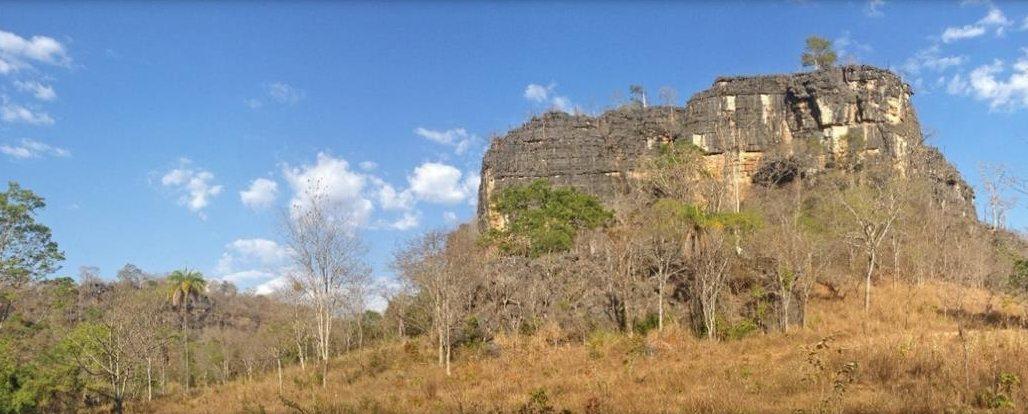
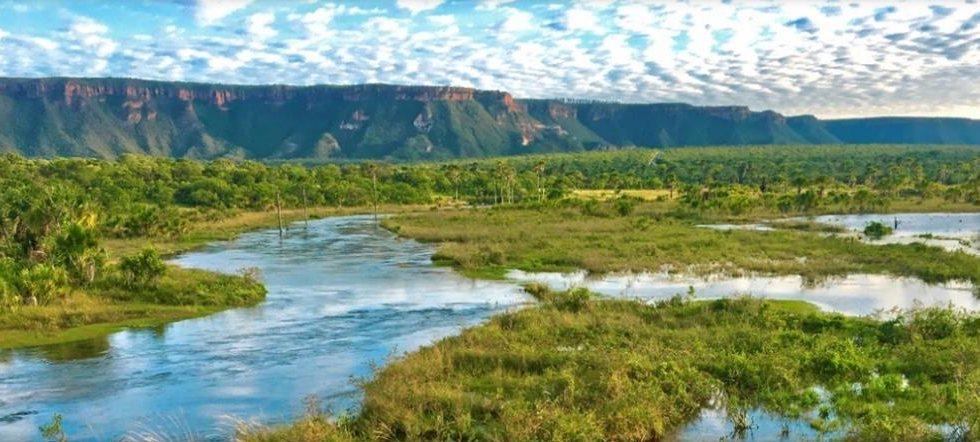
the town of São Domingos is located in the foothills of the Serra Geral Mountain Range, a natural border between the states of Bahia and Goiás. Inside the political boundaries of this small town is the Terra Ronca State Park with approximately 57.000 hectares that protects natural Cerrado, Dry and Gallery Forest habitats and fundamental water sources. A marking feature of this region is the deciduous or semi-deciduous dry forest growing on limestone outcrops or limestone-derived soils. And it’s in this specific habitat that the Pfrimer’s Parakeet lives in the forested slopes of the limestone cliffs. One of the largest speleological complexes in Brazil, there are numerous caves with clear subterranean rivers running through, which, all combined, makes the Park a quite pleasing scenario for the eyes. We will also be birding outside of the State Park, in Cerrado and Gallery Forest habitats to look for other targets.
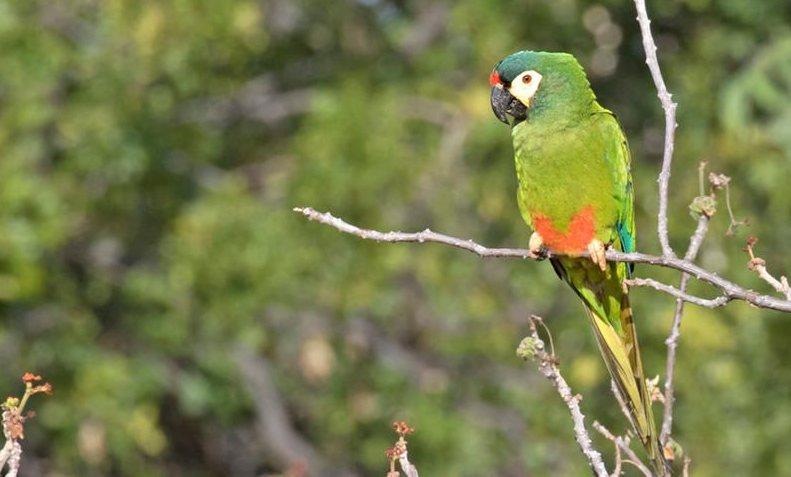
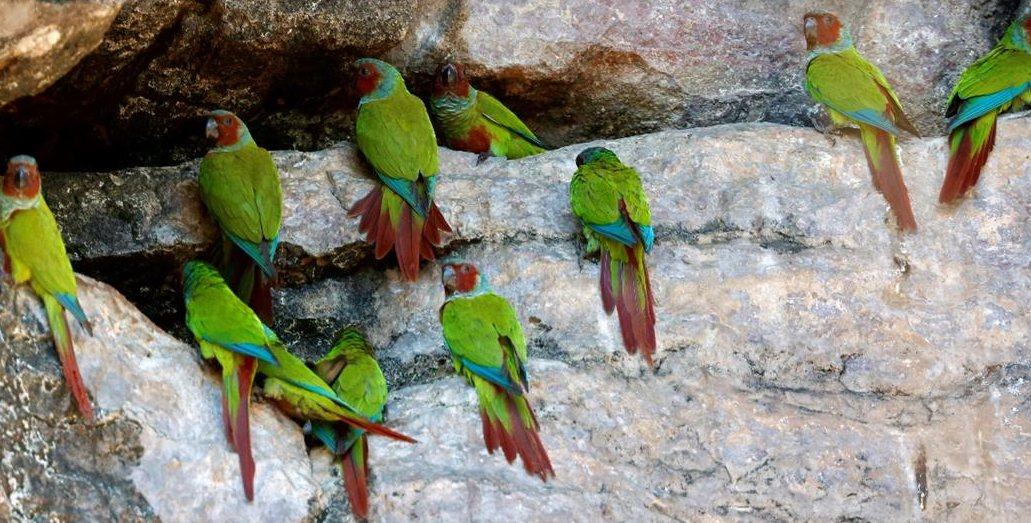
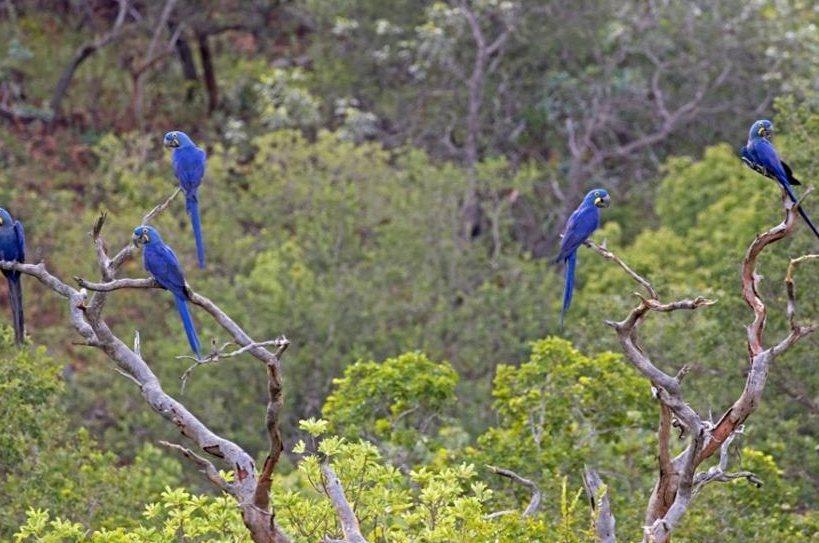
The main reason we come to this faraway location is because this is one of the only places where the Pfrimer's Parakeet (Pyrrhura pfrimeri) could be found. In this dry forest/limestone area, we will also have chances of seeing the Jandaya Parakeet (Aratinga jandaya), Biscutate Swift (Streptoprocne biscutata), Black-fronted Nunbird (Monasa nigrifrons), Buff-breasted Wren (Cantorchilus leucotis), Golden-crowned [White-bellied] Warbler (Basileuterus culicivorus hypoleucus), Buff-necked Ibis (Theristicus caudatus), Hennacapped Foliage-gleaner (Clibanornis rectirostris) and, with luck, we might see Ornate HawkEagle (Spizaetus ornatus). In the Cerrado and Gallery Forest habitat we visit on arrival day, our targets will be Chapada Flycatcher (Guyramemua affine), Point-tailed Palmcreeper (Berlepschia rikeri), Large-billed Antwren (Herpsilochmus longirostris), Rusty-backed Antwren (Formicivora rufa), White-rumped Tanager (Cypsnagra hirundinacea), Toco Toucan (Ramphastos toco), Horned Sungem (Heliactin bilophus), Curl-crested Jay (Cyanocorax cristatellus), White-throated Kingbird (Tyrannus albogularis), Nacunda Nighthawk (Chordeiles nacunda) and more. Not guaranteed, but we occasionally see Checkered Woodpecker (Veniliornis mixtus), Coal-crested Finch (Charitospiza eucosma) and White-striped Warbler (Myiothlypis leucophrys). For the parrot-lovers we have a very good chance to see the fantastic Hyacinth (Anodorhynchus hyacinthinus) and Red-and-green Macaws (Ara chloropterus), who roost in the cliffs of Serra Geral. Besides these two we could also see Yellow-faced Parrots (Alipiopsitta xanthops), Red-bellied Macaws (Orthopsittaca manilata), and Turquoise-fronted Parrots (Amazona aestiva).
AM and PM Birding in São Domingos.
Transfer to Cavernas do Peruaçu National Park (Itacarambi), in the state of Minas Gerais (+/-8hrs [560Km]). PM Birding.
Read more · 4 photos
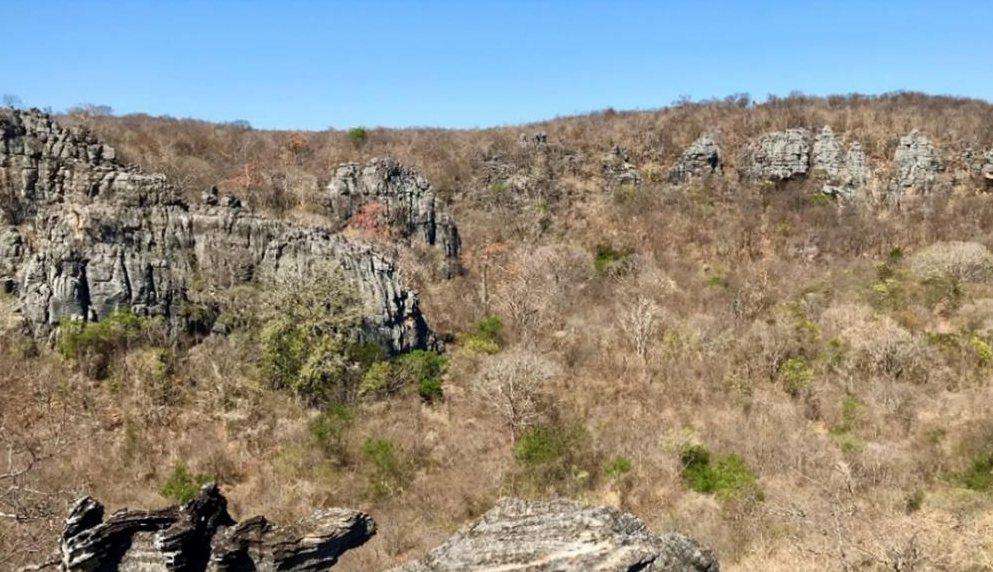
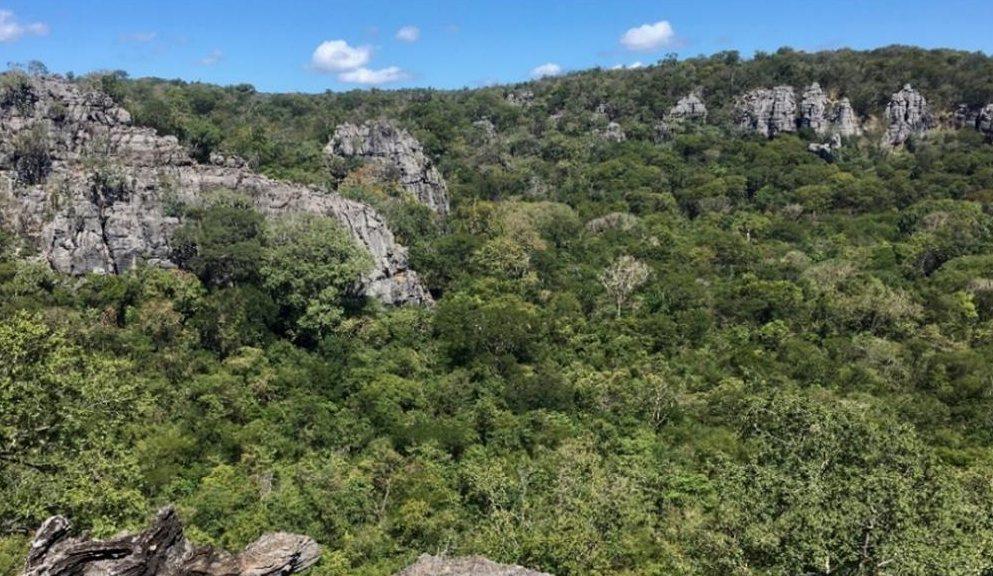
Created in 1999, the Cavernas do Peruaçu National Park protects 56.400 hectares of mainly Dry Forest and Caatinga habitats. The region is full of caves with ancient rock (cave) paintings. The Janelão (big window) cave is the most famous. The park is near the famous São Francisco River, where we will visit on arrival day to try for one of our main targets, the Bahian Nighthawk. We will stay in a small pousada managed by a local family, near the entrance of the National Park.
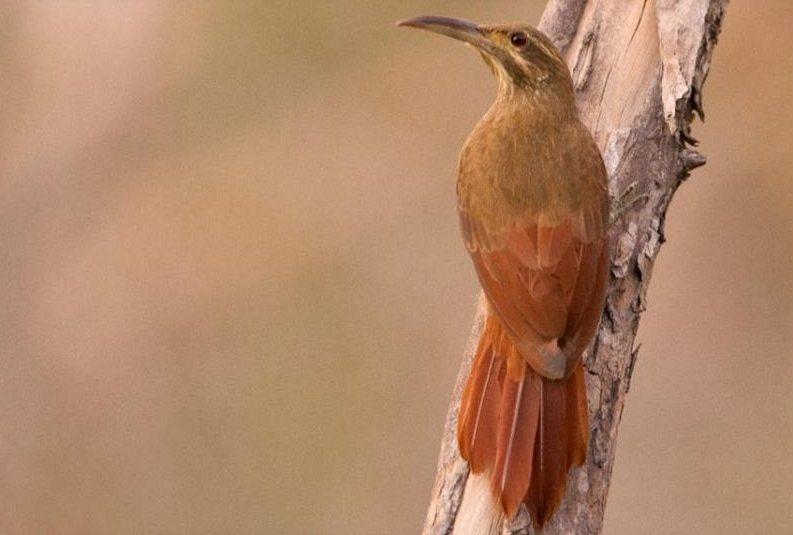
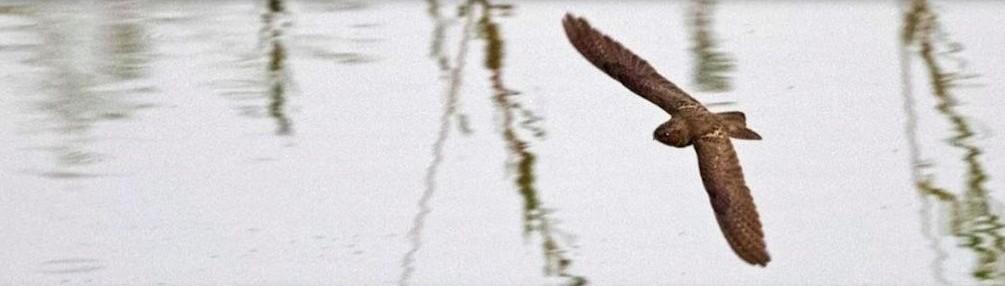
One of our highlights here is the endemic and range-restricted Plain-tailed Nighthawk (Nyctiprogne vielliardi), which is always more abundant when the river’s water level is low (August-November). We will observe this species in the end of the day, in the last rays of light, flying over the São Francisco River. Inside the National Park, our main targets are the rare Moustached Woodcreeper (Xiphocolaptes falcirostris) and Sao Francisco Black Tyrant (Knipolegus franciscanus). Other Dry Forest specialties include the Planalto (Dendrocolaptes platyrostris intermedius), Olivaceous [Reiser’s] (Sittasomus griseicapillus reiseri) and Scaled [Wagler’s] Woodcreepers (Lepidocolaptes squamatus wagleri), which are all dry forest races and potential splits. Other interesting birds to see are the nominal race of Surucua [Red-bellied] Trogon (Trogon surrucura surrucura), and Golden-capped Parakeet (Aratinga auricapillus). We will also have more chances of seeing some of the Caatinga specialties we might have missed.
AM Birding and PM Birding in Cavernas do Peruaçu NP.
AM Birding and transfer to Montes Claros (+/-3hrs [220Km]), where we will have PM Birding at Lapa Grande State Park.
Read more · 3 photos
The Lapa Grande State Park comprises 15.320 hectares of Dry-Forest vegetation associated with limestone, which aims to protect and conserve the complex of caves and the main sources of water supply for the community of Montes Claros. Here we will stay in a hotel downtown, about thirty minutes away from the State Park.
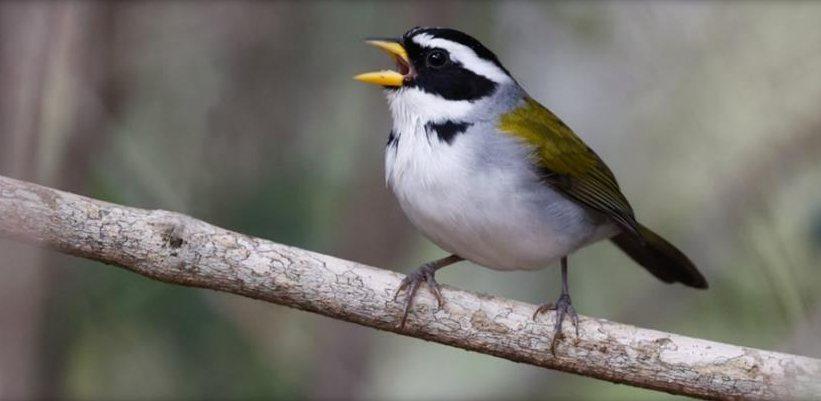
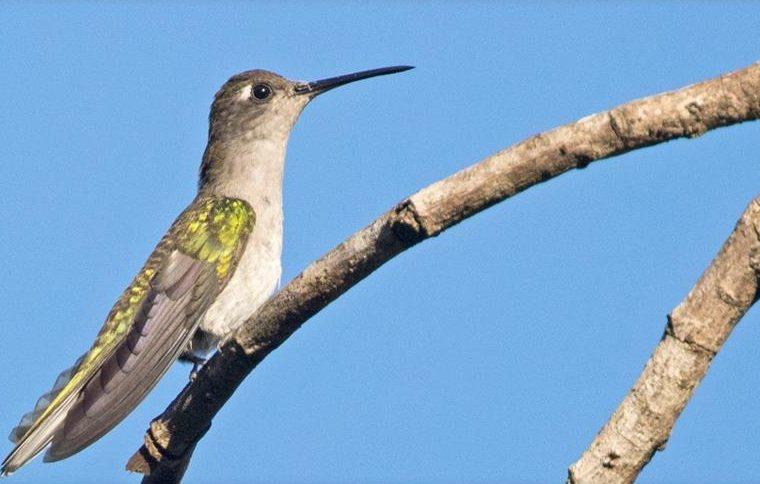
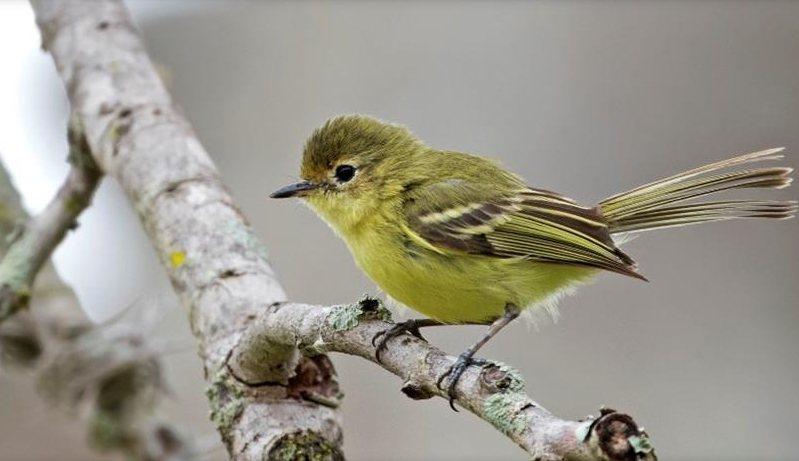
This is a stop to look for some very interesting and rare dry-forest birds such as Reiser’s Tyrannulet (Phyllomyias reiseri), Minas Gerais Tyrannulet (Phylloscartes roquettei), São Francisco Sparrow (Arremon franciscanus), Sao Francisco Black Tyrant (Knipolegus franciscanus), and the Outcrop Sabrewing (Campylopterus calcirupicola), just recently described (2017) to science as a new species. Other nice birds we might see are the nominal race of Scaled [Wagler’s] Woodcreeper (Lepidocolaptes squamatus wagleri), Ash-throated Casiornis (Casiornis fuscus), and Saffron-billed Sparrow (Arremon flavirostris).
AM Birding in Montes Claros if needed and transfer to Botumirim (+/-3hrs [180Km]). PM Birding.
Read more · 3 photos
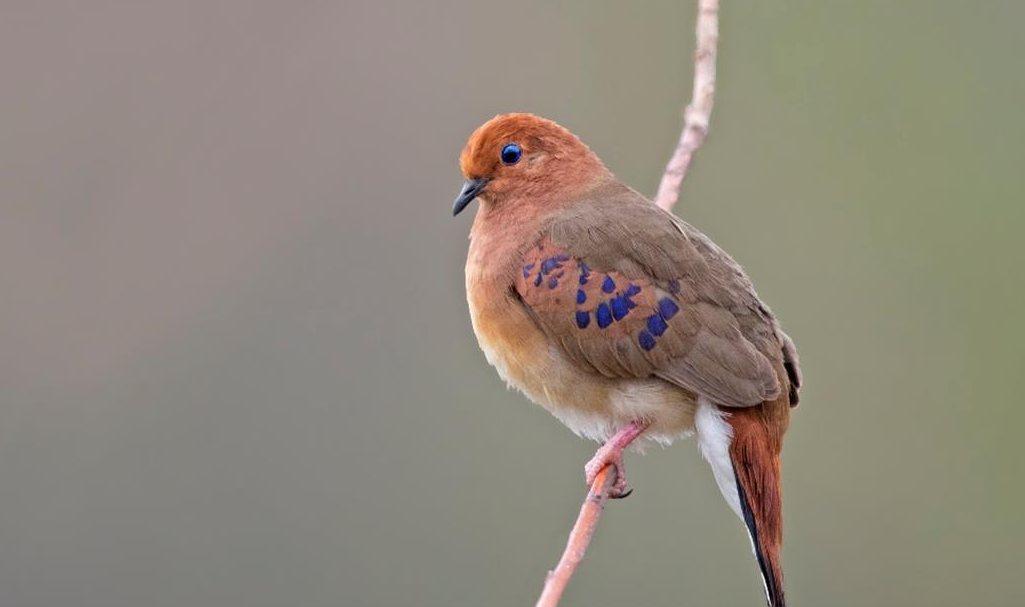
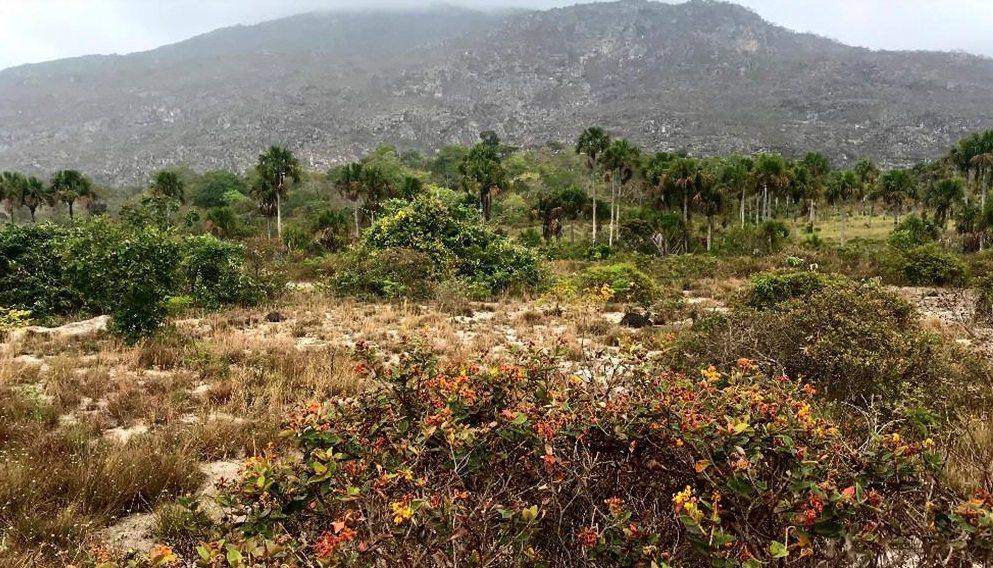
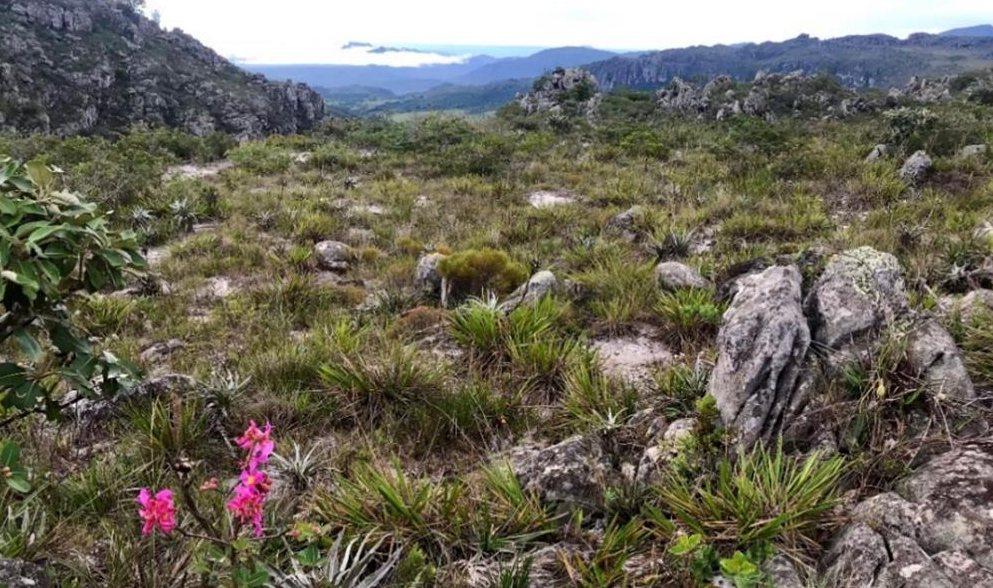
How could we talk about Botumirim without talking about the rediscovery of the Blue-eyed Ground Dove, one of the most exciting findings of the century! In 2015, a good friend of ours, Rafael Bessa, was on an environmental consultancy in the Botumirim area. As usual, when we do this type of work, we have designated coordinates to go for the bird surveys. To get to one of the coordinates, Rafael decided to take a shortcut and passed exactly in front of what is today the Blue-eyed Ground Dove Nature Reserve. He told us he was astonished with that beautiful and somewhat different habitat that grasped his attention. Although curiosity had already aroused, he could not stop since he had to get to the coordinate to proceed with the surveys. As soon as the field campaign finished, Rafael decided to visit that interesting location early the next day. As soon as he jumped out of the car, he heard something quite different, that sounded a bit like a frog, but not quite: surely something he had never heard before, so he decided to record the vocalization and play it back to reel in the thing that was making that sound. As soon as he played it back, the Blueeyed Ground Dove instantly jumped right in front of him. Rumors say that he could hardly hold in his physiological needs… Today, this species is still only found in Botumirim and one of the main areas where the Ground Doves live is a Nature Reserve managed by Brazilian NGO Save Brasil. The Reserve, together with the Botumirim State Park, protect an area of 35.000 hectares of preserved Cerrado and Campo Rupestre. Botumirim is a very interesting area of ecotones; here we can find Caatinga, Cerrado and Atlantic Forest specialties.
It is obvious that our main target here will be the Blue-eyed Ground Dove (Columbina cyanopis). The Ground Dove is critically endangered and an extremely sensitive species, therefore it is prohibited to use playback. But with patience, as the territories are well-known, we have very good chances of seeing this beautiful bird. Since we will be in the Espinhaço Mountain Range, there will be a few species associated with this rocky environment that we will also target like the Hyacinth Visorbearer (Augastes scutatus), Cinereous Warbling Finch (Microspingus cinereus) and, with a lot of luck, the Cipo Canastero (Asthenes luizae). There are a few other interesting species that we might see such as White-wedged Piculet (Picumnus albosquamatus), Copper Seedeater (Sporophila bouvreuil), Pin-tailed Manakin (Ilicura militaris), Serra Finch (Embernagra longicauda), Spot-tailed Nightjar (Hydropsalis maculicaudus), Narrow-billed Antwren (Formicivora iheringi), Greater Thornbird (Phacellodomus ruber), Chotoy Spinetail (Schoeniophylax phryganophilus), Greenish Schiffornis (Schiffornis virescens), Pale-bellied Tyrant-Manakin (Neopelma pallescens), Horned Sungem (Heliactin bilophus), Henna-capped Foliage-gleaner (Clibanornis rectirostris) and others.
AM and PM Birding in Botumirim.
Read more · 2 photos
AM Birding in Botumirim if needed and transfer to Boa Nova (+/-8hrs [600Km]).
Read more · 3 photos
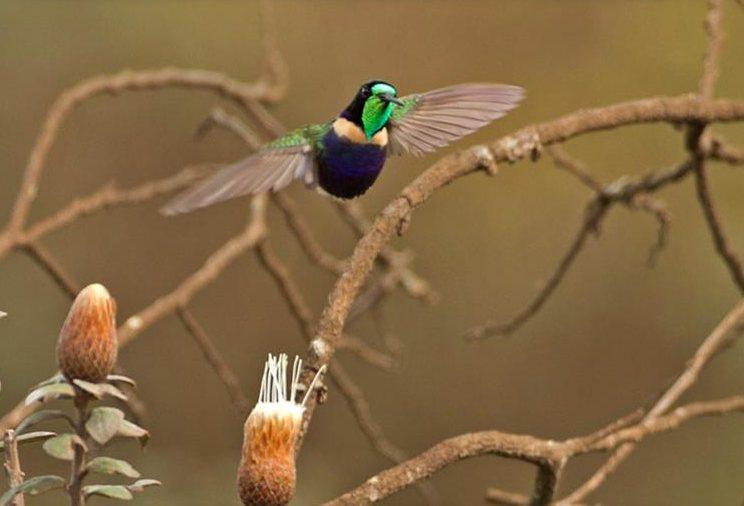
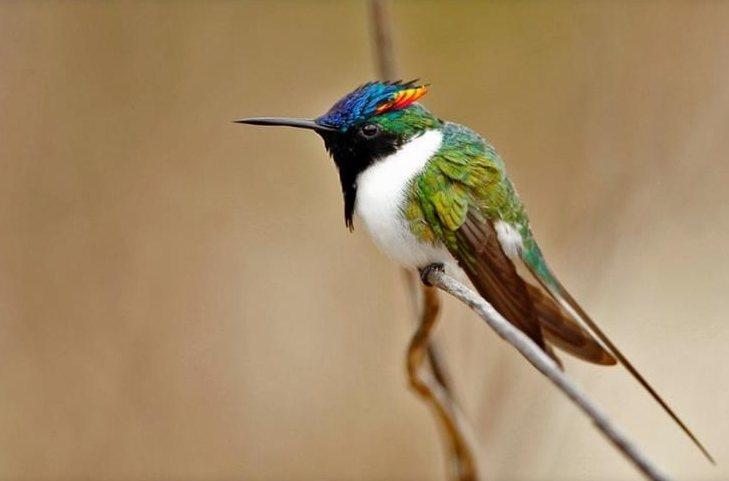
located in the Southwestern part of Bahia, Boa Nova is famous among birders due to its highly diverse bird community (+430 species), with typical elements of montane Atlantic Forest, Caatinga, and a unique transitional area between the Atlantic Forest and Caatinga known as “mata-de-cipó” (Vine Forest). This variety of habitats provides a rich avifauna, with many globally threatened species that motivated the Brazilian Government to create a mosaic of Protected Areas in the region; the National Park and Wildlife Refuge of Boa Nova, with 13.000 and 15.000 hectares, respectively. There is a place nearby the hotel (20min), with a natural hummingbird garden full of ground cacti (Melocactus bahiensis) that blossom every afternoon attracting many nice hummingbirds. Fortunately, this pristine and unique area is now owned and protected by a Brazilian couple of birders who are constantly improving facilities (hides and birdfeeders), especially for bird photographers. Although there are no species that only occur in this area, you will have excellent photo opportunities of hummers, caatinga birds, and more. So, if you are a keen bird photographer or like to enjoy a special scenario you will love the famous “Lajedo dos Beija-flores”.
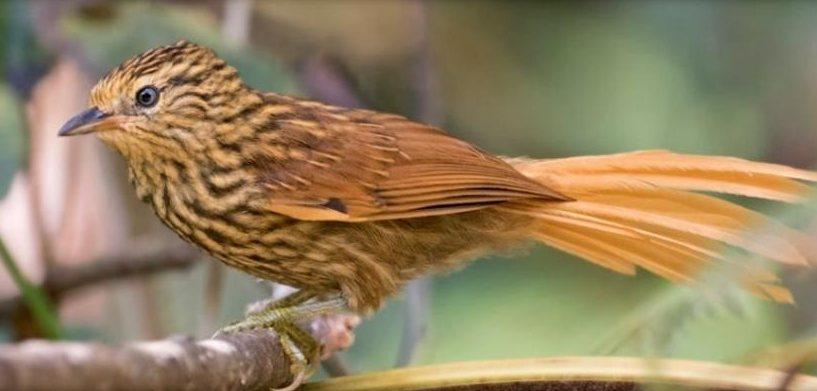
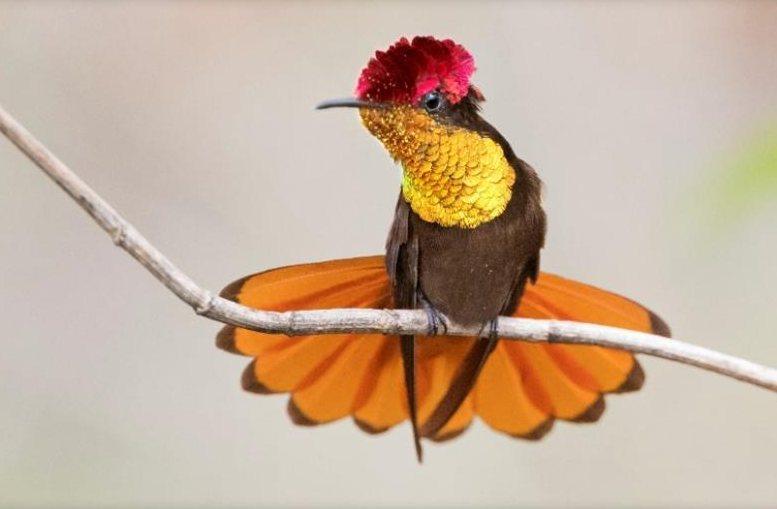
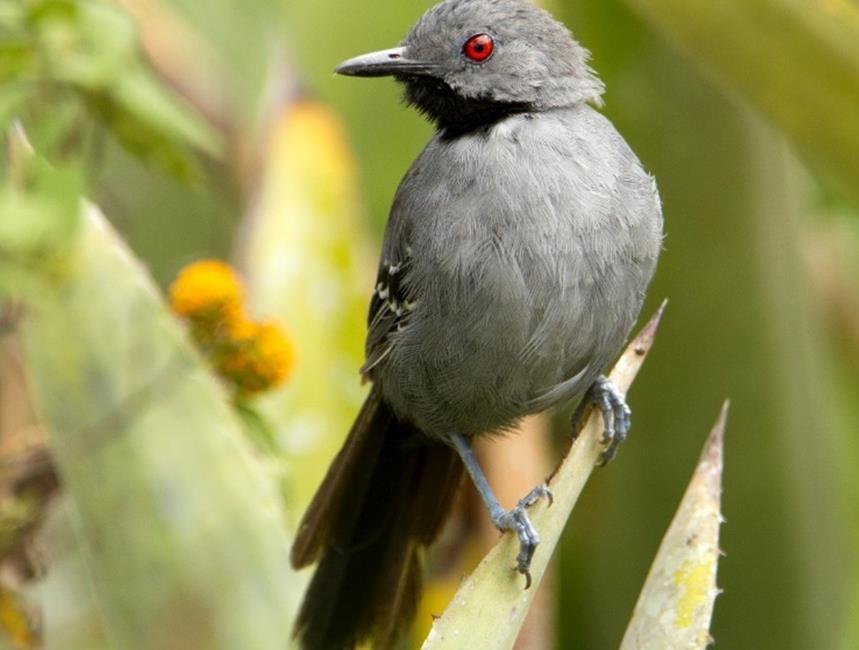
One of the main highlights is the Slender Antbird (Rhopornis ardesiacus), confined to the “mata-de-cipó” vegetation where we could also find the Narrow-billed Antwren (Formicivora iheringi) and Hangnest Tody-Tyrant (Hemitriccus nidipendulus). In the Montane Atlantic Forest we search for species such as the Striated Softtail (Thripophaga macroura), Bahia Spinetail (Synallaxis cinerea), Rio de Janeiro Antbird (Cercomacra brasiliana), Fork-tailed Tody-Tyrant (Hemitriccus furcatus), Crescent-chested Puffbird (Malacoptila striata), Rufousheaded Tanager (Hemithraupis ruficapilla), Black-billed Scythebill (Campylorhamphus falcularius), Pallid Spinetail (Cranioleuca pallida), East Brazilian Pygmy Owl (Glaucidium minutissimum), White-eyed Foliage-gleaner (Automolus leucophthalmus), Pin-tailed Manakin (Ilicura militaris), Scale-throated Hermit (Phaethornis eurynome), Spot-breasted Antvireo (Dysithamnus stictothorax), Ferruginous Antbird (Drymophila ferruginea), Grey-hooded Attila (Attila rufus), Gilt-edged Tanager (Tangara cyanoventris) and many others. Here, we will also have chances of seeing the fantastic Giant Snipe (Gallinago undulata). In the hummingbird garden (Lajedo dos Beija-flores), we could see Sapphire-spangled Emerald (Chionomesa lactea), Swallow-tailed Hummingbird (Eupetomena macroura), Planalto Hermit (Phaethornis pretrei), Stripe-breasted Starthroat (Heliomaster squamosus), Ruby-Topaz Hummingbird (Chrysolampis mosquitus), depending on season, among others. The highlights in Poções include the rare Wied’s Tyrant-Manakin (Neopelma aurifrons), White-bibbed Antbird (Myrmoderus loricatus), Greenish Schiffornis (Schiffornis virescens), Scaled Woodcreeper (Lepidocolaptes squamatus), Blue Manakin (Chiroxiphia caudata) and others.
In the neighboring municipality (Poções), there is a young birder (Mateus) who found some rarities. It is important to mention that some areas in Poções are not reached by van in case of rain.
AM and PM Birding in the Boa Nova area.
AM Birding in Poções area and PM Birding in the Boa Nova area.
Transfer to Itacaré (+/-4hrs [200Km]). PM Birding.
Read more · 2 photos
This region of South Coast Bahia is rich in endemism and special birds. With a vast area of remnants of lowland forest, some of them in private areas and other protected by Serra do Conduru State Park. Here we will be based in Itacaré, a famous touristic destination with marvelous forest, beaches, and waterfalls. From there we will do excursions to Maraú (north of Itacaré) to try to see the rare and endemic Bahia Tapaculo (Eleoscytalopus psychopompus). We will also explore the Serra do Conduru State Park, south of Itacaré. This State Park protects more than 9,000 hectares of Atlantic Forest and it is one of the most biodiverse areas of this biome, with 458 different tree species per hectare with high index of endemism. This reflects on the avifauna; a paradise to see manakins and many other interesting birds.
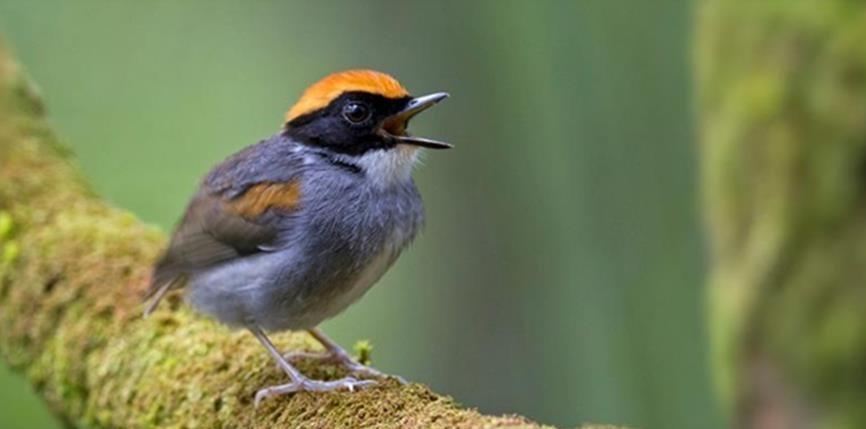
Our main target will be a very rare bird: the Endangered Bahia Tapaculo (Eleoscytalopus psychopompus). Other targets of this lowland Atlantic Forest will be Kinglet Manakin (Machaeropterus regulus), White-crowned Manakin (Pseudopipra pipra), Bluebacked Manakin (Chiroxiphia pareola), Scaled Antbird (Drymophila squamata), Black-cheeked Gnateater (Conopophaga melanops), Band-tailed Antwren (Myrmotherula urosticta), Cinereous-breasted Spinetail (Synallaxis hypospodia), Great-billed [Margaretta's] Hermit (Phaethornis malaris margarettae), White-bellied Tanager (Tangara brasiliensis), Opal-rumped [Silvery-breasted] Tanager (Tangara velia cyanomelas), the nominal race of White-fronted Nunbird (Monasa morphoeus morphoeus) and many others.
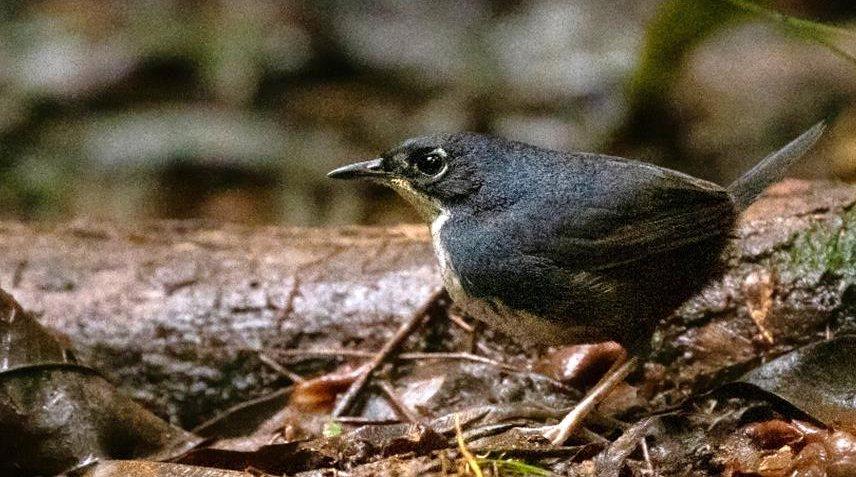
AM Birding. Transfer to Camacan (Serra Bonita Reserve) (+/-3hrs [200Km]), stopping on route to try to look for the Pink-legged Graveteiro (Acrobatornis fonsecai).
Read more · 2 photos
The Serra Bonita Reserve is a pioneering, innovative private conservation enterprise, protecting sub montane forest in Southern Bahia. This initiative started thanks to Vitor Becker and Clemira, that after retirement decided to dedicate their lives to the protection of this important and unique fragment of forest. It aims to protect the Atlantic Forest of the region through a consortium of several rural property owners, whose properties contain RppNs (private reserves). Altogether, they protect over 2,500 hectares. The RppNs are managed by Instituto Uiraçu, through agreements with the owners. In addition to managing these private reserves and its own, purchased through donations, the Institute aims to extend the protection of the entire Serra Bonita Mountain Range, one of the last remnants of sub montane forest in the region, which covers an area of about 7,500 hectares, ranging from 200 to 1000 meters of altitude, in the municipalities of Camacan and Pau Brasil, Bahia. We will sleep in the highlands of the reserve, in the good hands of Vitor and Clemira, where we will enjoy the famous Serra Bonita Caipirinhas. Near the headquarters, they also have feeders for hummers and tanagers.
The main targets in the highlands are Bahia Tyrannulet (Phylloscartes beckeri), Plumbeous Antvireo (Dysithamnus plumbeus), Salvadori’s Antwren (Myrmotherula minor), Sharpbill (Oxyruncus cristatus), Lemon-chested [Rio de Janeiro/Bahia] Greenlet (Hylophilus thoracicus thoracicus), [Greater] Crescent-chested Puffbird (Malacoptila striata striata), the rare Atlantic race (to be split) of Rufous-brown Solitaire (Cichlopsis leucogenys leucogenys), Blue Manakin (Chiroxiphia caudata), Spot-backed Antshrike (Hypoedaleus guttatus), Spotbilled Toucanet (Selenidera maculirostris), Sombre Hummingbird (Eupetomena cirrochloris) and many more. If we are lucky enough to find a big mixed flock, we have chances of seeing the rare Bahia Treehunter (Heliobletus sp. nov.), which is still waiting for a formal description. Some birds we could see by the feeders include Maroon-bellied Parakeet (Pyrrhura frontalis), Red-necked (Tangara cyanocephala), Green-headed (Tangara seledon), Golden-chevroned (Thraupis ornata), Azure-shouldered (Thraupis cyanoptera) Tanagers and sometimes even the
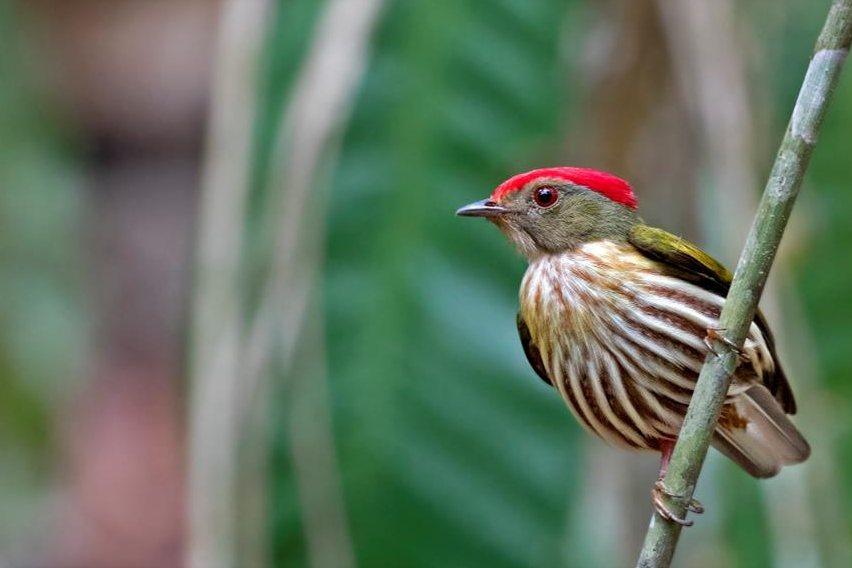
Spot-billed Toucanet. On the day we leave the reserve, we will spend some time birding in the lowlands where we will search for Kinglet Manakin (Machaeropterus regulus), White-eared (Pyrrhura leucotis), Ochre-marked (Pyrrhura cruentata) and Golden-capped Parakeets (Aratinga auricapillus), Black-necked Aracari (Pteroglossus aracari), atlantic race of Thrush-like Wren (Campylorhynchus turdinus turdinus), Yellow-rumped (Cacicus cela) and Red-rumped (Cacicus haemorrhous) Caciques, Chestnut-backed Antshrike (Thamnophilus palliatus), Yellow-fronted Woodpecker (Melanerpes flavifrons) and many more. In recent years, we sometimes see the beautiful and ultra-rare Banded Cotinga (Cotinga maculata) coming to feed on Açai Palm (ripe berries) near the headquarters of one of the properties in the lowlands. Let’s cross our fingers to be in the right place at the right time. We’ll have extra chances for the unique Pink-legged Graveteiro (Acrobatornis fonsecai), if we’re very lucky.
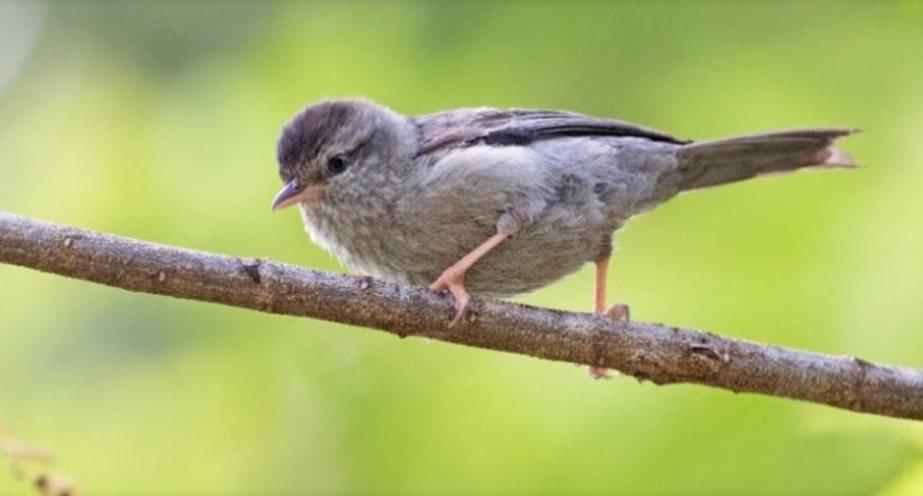
AM and PM Birding in Serra Bonita Reserve.
Read more · 3 photos
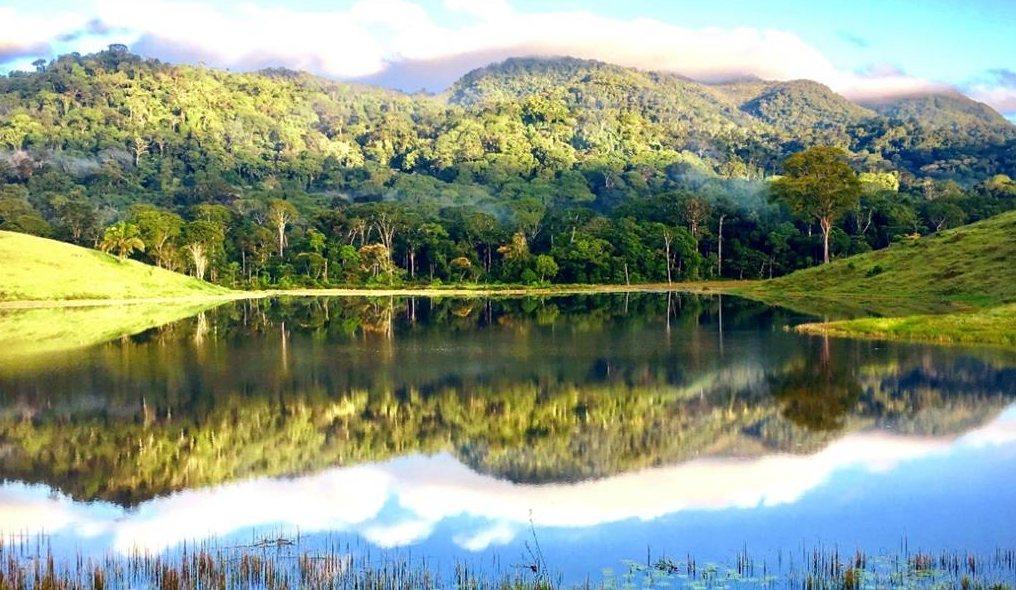
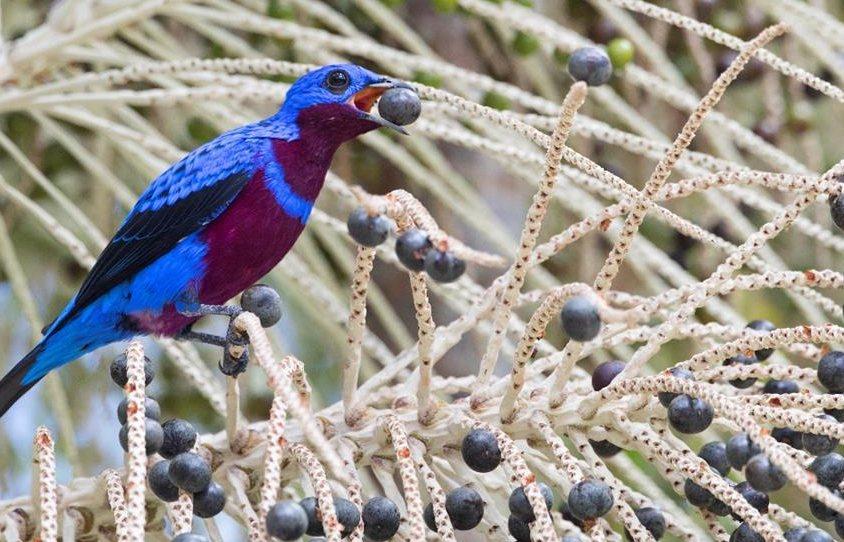
AM Birding in the lowlands of Serra Bonita Reserve and transfer to Porto Seguro (+/-3hrs [200Km]). PM Birding.
Read more · 3 photos
One of the most famous beaches in the southern coast of Bahia, Porto Seguro is one of the biggest touristic destinations in Brazil, so do not panic if there seems to be a lot of people on the streets. However, we will hardly be affected by the possible crowds in town since we will be birding in Veracel Reserve, only 30km from our hotel. This private area protects nearly 7.000 hectares of a unique type of Lowland Atlantic Forest known as “Mata de Tabuleiro”, which shares many elements (Fauna and Flora) with the Amazon Forest. In some sites of the forest, the calls of Screaming Pihas and huge trees will bring us back memories of birding in the Amazon.
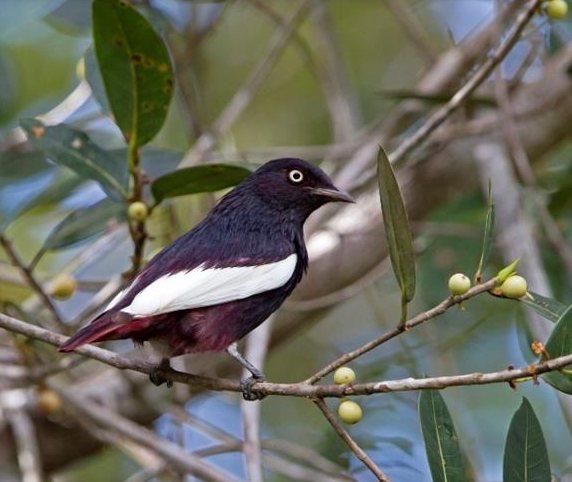
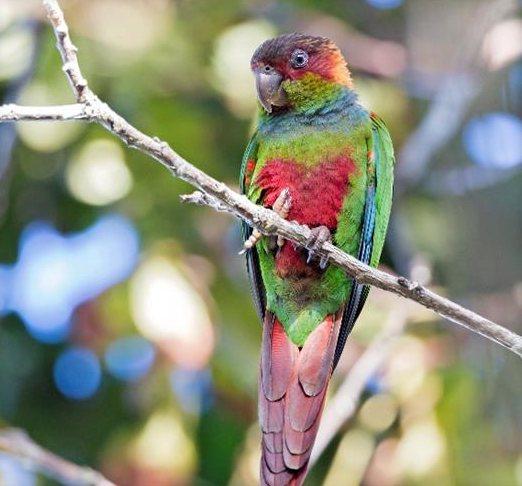
The main targets here will be White-winged Cotinga (Xipholena atropurpurea), Hooked-billed Hermit (Glaucis dohrnii), Red-browed Parrot (Amazona rhodocorytha), Bahia Antwren (Herpsilochmus pileatus), Band-tailed Antwren (Myrmotherula urosticta), Blackheaded Berryeater (Carpornis melanocephala), Ochre-marked Parakeet (Pyrrhura cruentata), Sooretama Slaty Antshrike (Thamnophilus ambiguus), extra chances for Banded Cotinga (Cotinga maculata) and many more. There are also quite a few species that are already recognized as valid species in the Brazilian List and might/should be split soon by the international lists, as already happened with the White-bellied Tanager (Tangara brasiliensis). They are: Opal-rumped [Silvery-breasted] Tanager (Tangara velia cyanomelas), Blue-headed [Reichenow’s] Parrot (Pionus menstruus reichenowi), Ringed [Atlantic Black-breasted] Woodpecker (Celeus torquatus tinnunculus), Golden-spangled [Bahia] Piculet (Picumnus exilis exilis), Wedge-billed [cuneatus group] Woodcreeper (Glyphorynchus spirurus cuneatus), the nominal race of Brown-winged Schiffornis (Schiffornis turdina turdina) among others. There will be some night birding as well, where we will look for Black-capped Screech Owl (Megascops atricapilla), Tawny-browed Owl (Pulsatrix koeniswaldiana) and, with a lot of luck, the White-winged Potoo (Nyctibius leucopterus), which is very rare in the Atlantic Forest.
AM and PM Birding in Porto Seguro (Veracel Reserve).
AM Birding if we have time. Departures.
Visual journey
Make it yours
Every trip we design is unique, built around your wish list, dates and dream destinations.
Start planning my tripThis is a sample itinerary from a past custom trip. Every tailored tour is built around your dates, pace and target list.